
CAC News
PHNOM PENH / NEW DELHI — India and Cambodia are reinforcing cultural and spiritual ties rooted in centuries-old religious traditions, as New Delhi advances plans to strengthen regional cooperation around Buddhist heritage and pilgrimage.
Indian Prime Minister Narendra Modi has spoken in recent remarks in X about developing a “Buddhist Circuit” aimed at preserving and connecting sacred pilgrimage sites across Asia. The initiative seeks to promote faith-based tourism while ensuring that the teachings of Buddhism—centered on peace, harmony, and spiritual reflection—are passed on to future generations.
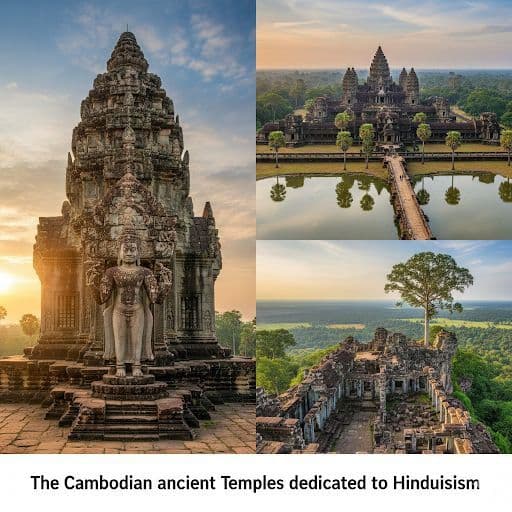
The vision has resonated in Cambodia, where Buddhism is the state religion and a central part of daily life. Cambodian scholars and cultural leaders frequently point to ancient temple complexes such as Angkor Wat as enduring symbols of the shared civilizational links between India and Southeast Asia, shaped by Hindu and Buddhist philosophies.
Angkor Wat, originally constructed as a Hindu temple dedicated to Vishnu before gradually transitioning into a Buddhist site, reflects the deep historical influence of Indian religious traditions in the region. Similar architectural and spiritual influences are visible across Cambodia, which is home to numerous Hindu and Buddhist temples dating back more than a millennium.
Regional Sensitivities and Religious Concerns
Cultural cooperation has gained renewed attention following recent tensions along the Cambodia–Thailand border. Cambodian groups and religious organizations have expressed anger after Thai troops were accused of demolishing a Hindu deity statue during an alleged incursion into Cambodian territory. The Thai military has not publicly responded to the specific allegation.
The incident has drawn criticism from Hindu communities worldwide. Silot Uon, President of the Cambodian Association of Cambodia (CAC), said the destruction of religious symbols had caused deep concern among Hindus globally.
He also said Cambodia could play a greater role in welcoming Hindu pilgrims, noting that Angkor Wat and other Hindu-era temples across the country remain active places of worship. “Cambodia has many Hindu temples suitable for pilgrimage and prayer,” he said, adding that Angkor Wat holds particular spiritual significance for Hindus as well as Buddhists.
Shared heritage and modern diplomacy
Analysts say cultural diplomacy centered on religion and heritage has become an important element of India’s engagement with Southeast Asia, complementing its “Act East” policy. Cambodia, for its part, has emphasized the importance of safeguarding historical sites while promoting religious tolerance and intercultural dialogue.
As India and Cambodia continue to highlight their shared spiritual legacy—rooted in Buddhism, Hinduism, and the concept of Dharma—officials from both countries say preserving cultural heritage can serve as a foundation for peace, mutual understanding, and regional cooperation.