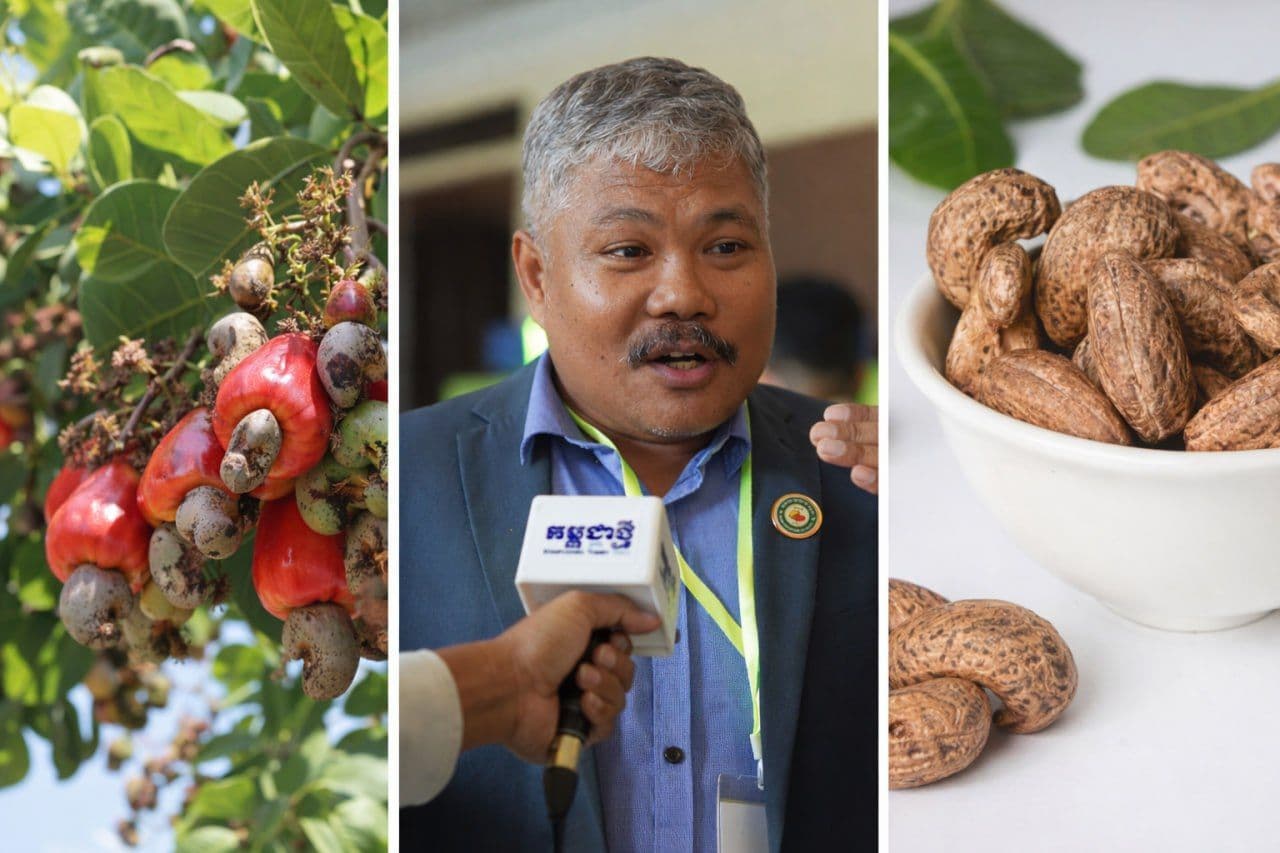
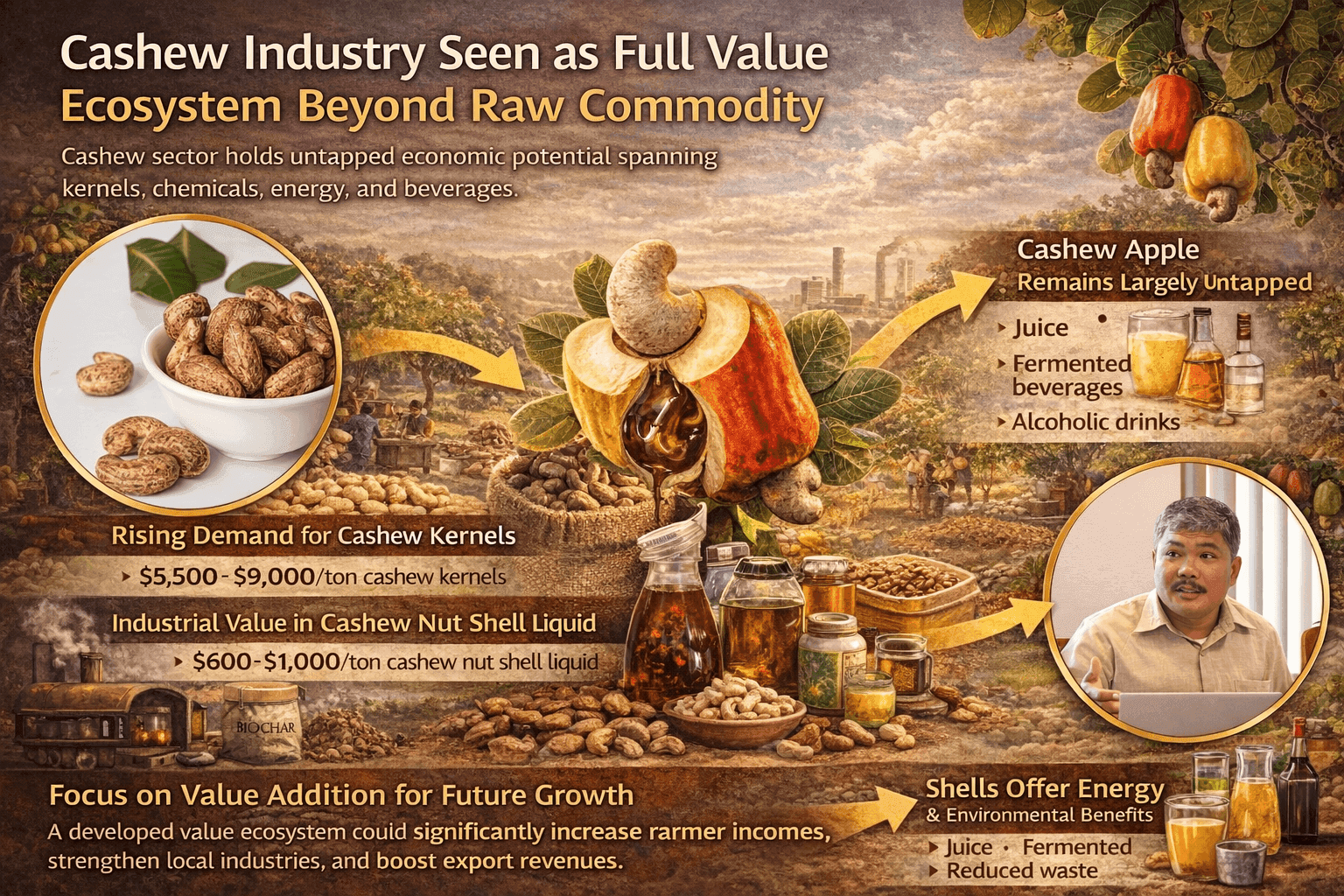
Cashew is often viewed as a simple agricultural commodity, but Silot says it represents a far more complex and valuable ecosystem, with economic potential extending beyond the kernel to every part of the fruit.
Across many producing regions, particularly in Africa and Asia, a significant portion of this value remains underutilized, highlighting opportunities for growth through processing and innovation.
Rising Demand for Cashew Kernels
The cashew kernel remains the most recognized and commercially valuable product. Global demand continues to grow as consumers increasingly favor healthier snacks and plant-based foods. Cashew kernels are widely used in confectionery, dairy alternatives, bakery items, and ready-to-eat products.
International prices typically range between $5,500 and $9,000 per ton, depending on quality and market conditions, making kernels a key driver of export revenue for producing countries.
Industrial Value in Cashew Nut Shell Liquid
Beyond the kernel, the cashew shell contains Cashew Nut Shell Liquid (CNSL), a valuable industrial raw material. CNSL is used in the production of resins, coatings, friction materials, polymers, and bio-based chemicals.
This by-product provides an additional revenue stream for processors, with prices generally ranging from $600 to $1,000 per ton, thereby improving profitability in the processing sector.
Shells Offer Energy and Environmental Benefits
Cashew shells, often treated as waste, can be repurposed as industrial fuel for boilers or used in the production of biochar and compost. Efficient use of shells not only reduces waste but also enhances the overall economics of cashew processing operations.
Cashew Apple Remains Largely Untapped
The cashew apple — the fleshy fruit attached to the nut — represents one of the most underutilized components of the crop. Rich in Vitamin C, it holds strong potential for juice production, fermented beverages, and alcoholic drinks.
Despite these opportunities, large volumes of cashew apples are still discarded in many producing countries, representing a missed opportunity for value addition.
Focus on Value Addition for Future Growth
Industry observers note that the future of the cashew sector, particularly in West Africa, will depend on expanding local processing capacity and maximizing the use of the entire crop rather than exporting raw nuts alone.
Developing a full value chain could significantly increase farmer incomes, strengthen domestic processing industries, and boost export revenues.
As global demand continues to rise, stakeholders are increasingly recognizing that cashew is not just a crop, but a multi-sector opportunity spanning food, chemicals, energy, and beverages — with its true potential lying in the full utilization of every part of the fruit.