April 2026 – Phnom Penh
Fertilizer and pesticide prices in Cambodia have surged sharply by 25% to 30%, placing mounting pressure on farmers and threatening agricultural productivity. The spike is largely attributed to rising global fuel costs linked to ongoing tensions in the Middle East, which have driven up transportation and import expenses.
Industry experts warn that without timely intervention, the increase in agricultural input costs could disrupt the entire production chain, weaken farmer livelihoods, and pose risks to food security.
Input Costs Climb Rapidly
According to Mr. Hur Thineang, General Manager of the Fertilizer and Pesticide Department at Angkor Green, fertilizer prices have risen significantly within a short period.
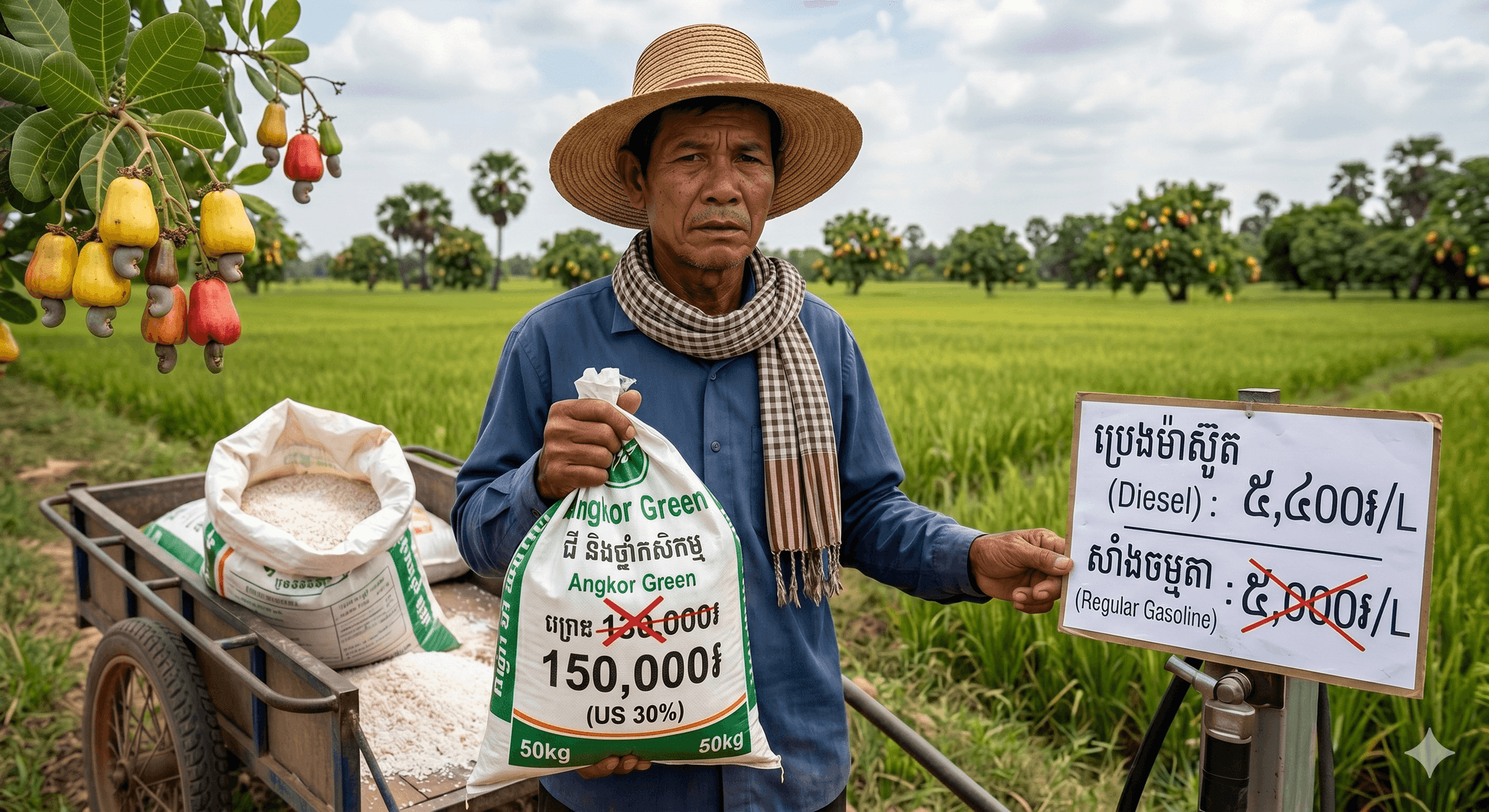
He noted that high-quality fertilizer at his company now costs around 150,000 Riel per bag, up from 130,000 Riel just a month ago. The primary driver behind the increase is the rising cost of fuel, which has led to higher transportation and logistics expenses across the supply chain.
Mr. Thineang urged the government to simplify and facilitate import procedures for agricultural inputs, a move he said could help reduce costs and stabilize the domestic market.
Farmers Face Mounting Pressure
The surge in fertilizer prices is having immediate and far-reaching consequences for farmers across the country.
Many are being forced to cut back on fertilizer use, resulting in lower crop yields and diminished harvest quality. At the same time, production costs are rising while crop prices remain largely unchanged—squeezing profit margins and, in many cases, leading to financial losses.
As a result, farmers are increasingly turning to loans to sustain their operations, raising concerns about growing rural debt. Some have already begun abandoning farming altogether or switching to less profitable crops, a trend that could undermine the long-term sustainability of the agricultural sector.
Fuel Prices Add to the Burden
The cost pressures are further compounded by rising domestic fuel prices. According to the Ministry of Commerce, effective from April 24 until further notice, retail fuel prices have been set at 5,000 Riel per liter for regular gasoline and 5,400 Riel per liter for diesel nationwide.
These elevated fuel costs continue to ripple across the economy, affecting everything from farm operations to the transportation of goods.
Government Steps In with Relief Measures
In response to the growing crisis, the Royal Government of Cambodia has introduced urgent intervention measures aimed at easing the burden on citizens and producers.
Among the key steps is the decision to absorb the 10% Value Added Tax (VAT) on diesel and liquefied petroleum gas (LPG), effectively subsidizing these fuels. The policy is intended to lower living expenses and reduce production costs across sectors, including agriculture.
As global uncertainties continue to influence local markets, the coming months will be crucial in determining whether the country can safeguard its farmers and maintain a resilient agricultural economy.
Reference CAMBONOMIST