CAC News
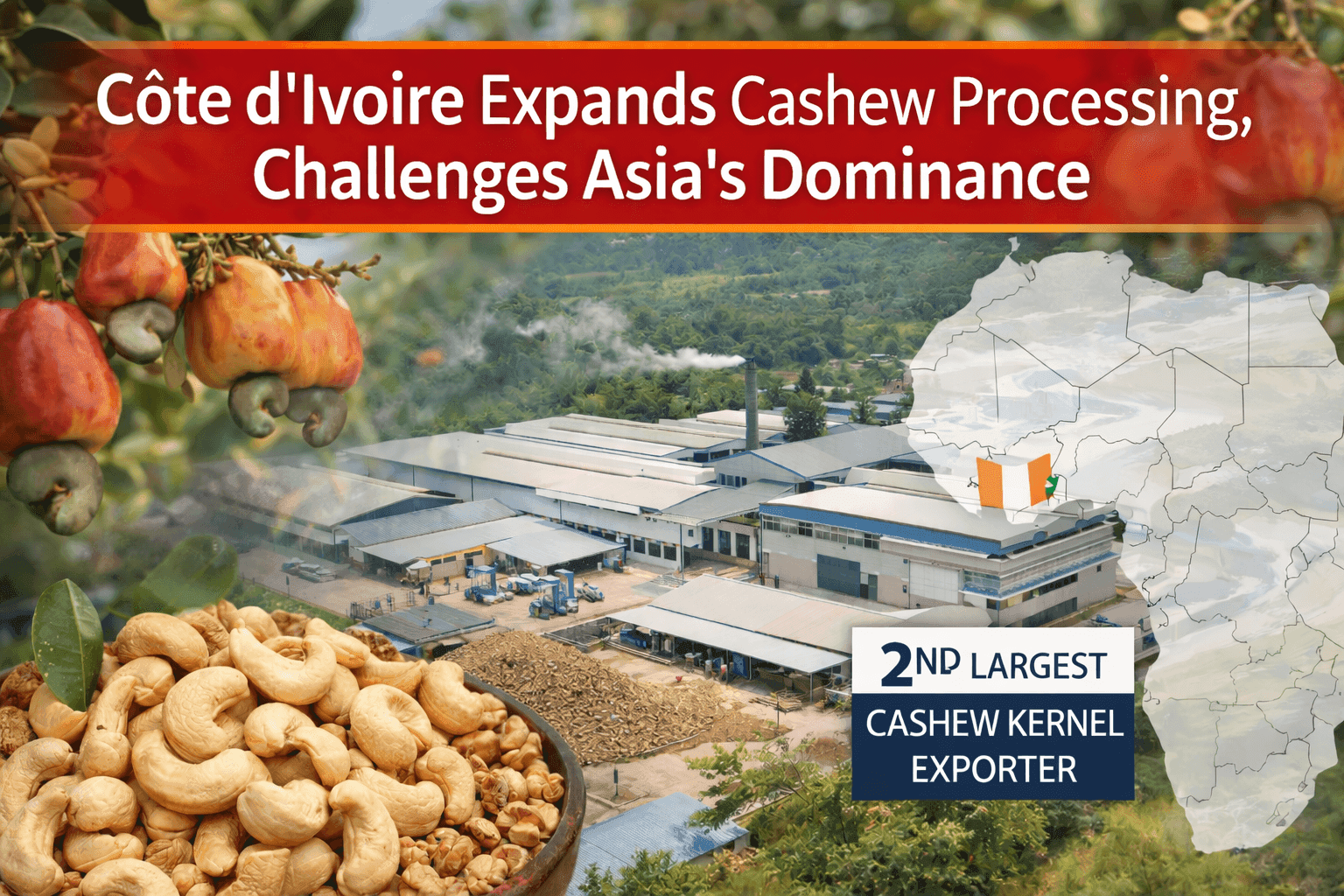
Côte d’Ivoire — Côte d’Ivoire (Ivory Coast) is rapidly emerging as a major force in the global cashew industry, with ambitions to process half of its domestic cashew production by 2030. If successful, the West African nation could become the first African country to surpass an Asian competitor in the export of a major processed agricultural product.
Cashews represent a global market valued at approximately $9 billion, widely used in products such as pesto, cookies, and energy bars. Côte d’Ivoire plays a critical role in this industry, producing about 40 percent of the world’s raw cashews, making it the largest supplier globally.
For many years, most of the country’s raw cashew nuts were exported to Asia—particularly Vietnam and India—for processing before being sold to international markets. However, the situation is beginning to shift.
In 2025, Côte d’Ivoire became the world’s second-largest exporter of cashew kernels, generating approximately $625 million in exports and ranking just behind Vietnam, which has long dominated the sector.
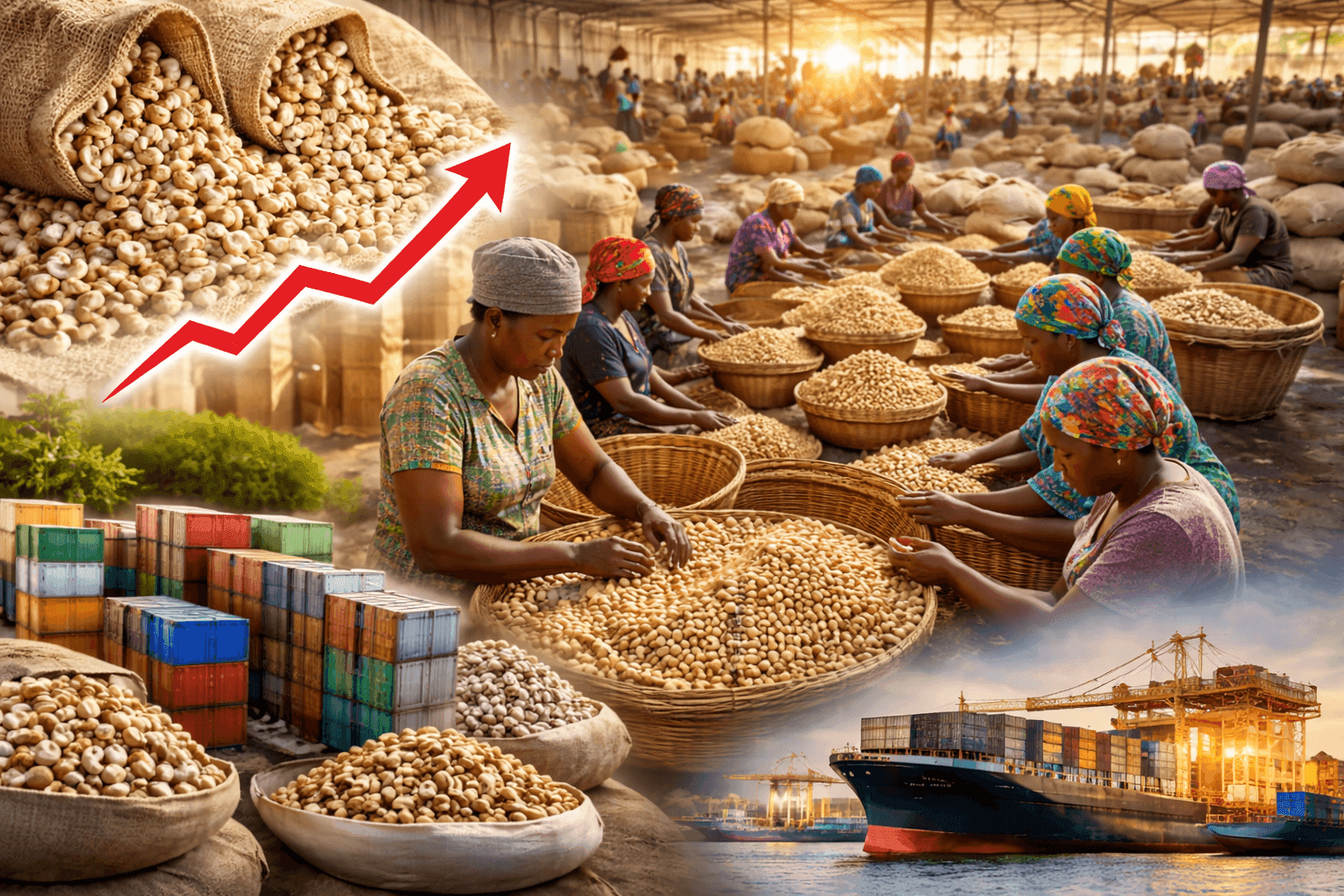
The country has significantly expanded its domestic processing capabilities and now boasts 660,000 tonnes of installed processing capacity. This development reflects a broader strategy to capture more value from its agricultural resources rather than exporting raw commodities.
Industry observers say that overtaking an Asian country in the export of a processed agricultural product would represent a historic milestone for Africa’s industrial development.
Over the past decade, Côte d’Ivoire has implemented several initiatives to strengthen the cashew sector. These include the rehabilitation of 300 kilometers of feeder roads to improve access between farms and processing facilities, the establishment of shared industrial processing platforms, and the introduction of a production-based export subsidy designed to encourage higher output rather than simply attracting investment.
As a result of these efforts, the country’s processed cashew volumes have tripled over the past seven years.
Experts view Côte d’Ivoire’s progress as one of the most significant agricultural industrialization stories currently unfolding in Africa. The sector’s transformation has been shaped by factors such as the historical decline of the cotton industry, technological advances pioneered in Vietnam, development programs supported by the World Bank, and a targeted industrial strategy focused on local value addition.
With continued investment and policy support, Côte d’Ivoire could soon reshape the global cashew trade and strengthen Africa’s position in processed agricultural exports.
Reference: Databites Africa