

CAC News
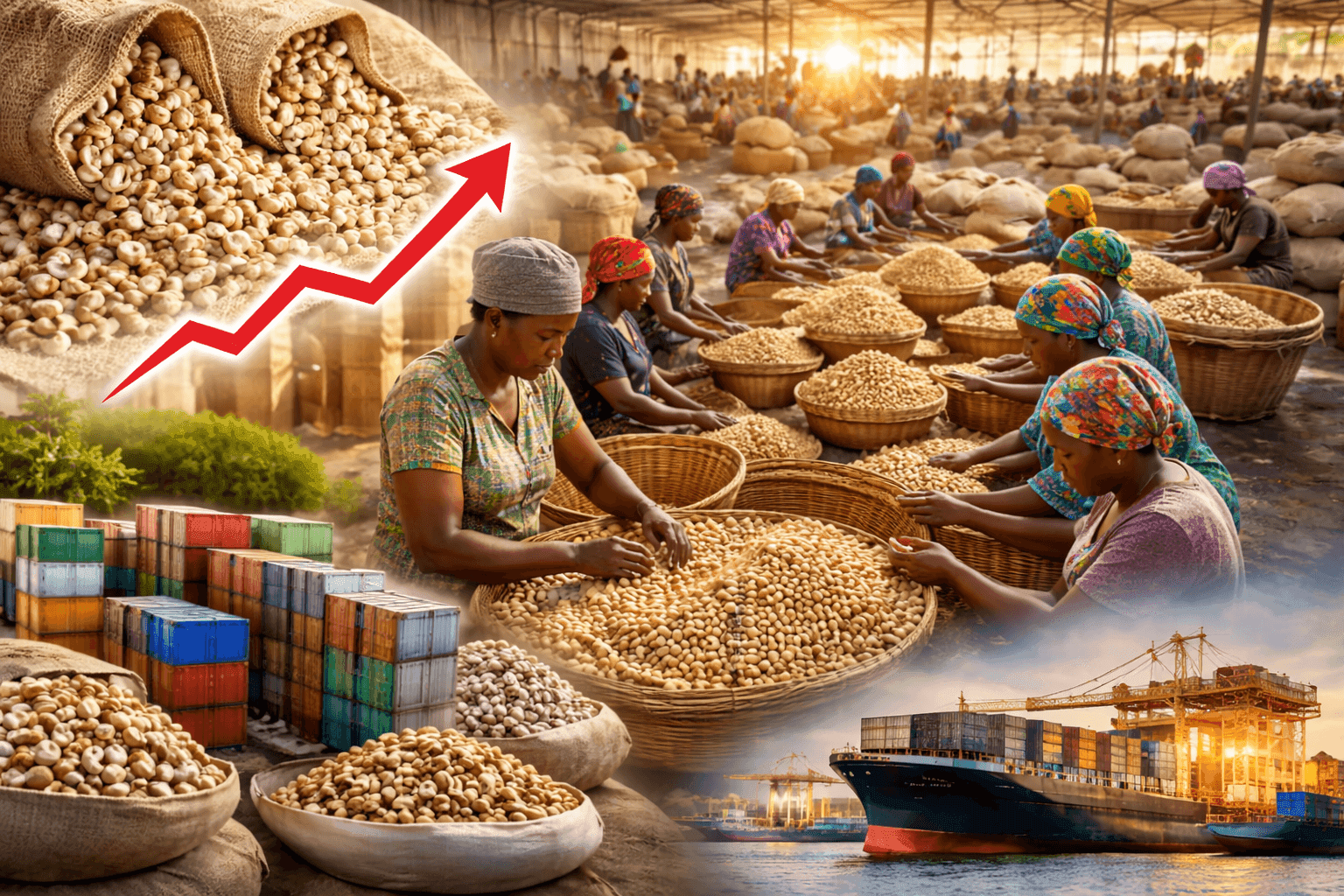
Phnom Penh, February 2026 — The global raw cashew nut (RCN) market is expected to face a challenging year in 2026 as strong production in West Africa combines with rising demand, price volatility and regulatory changes, according to market outlook reports.
West Africa is projected to produce between 1.9 million and 2.1 million metric tons of raw cashew nuts, maintaining its position as the world’s largest supplier. Côte d’Ivoire is expected to remain the leading producer, with output forecast to exceed 900,000 metric tons, followed by Benin, Burkina Faso, Ghana and Togo.
Industry analysts say the 2026 season is shaping up to be strategically important for traders and processors, with tighter margins and stricter quality requirements expected across the supply chain.
Rising Kernel Demand
Demand for processed cashew kernels is projected to grow by 6–8 percent, driven by major processing and consumer markets including India, Vietnam and the Middle East. The increase is expected to encourage processors to secure higher-quality raw cashew nuts earlier in the season.
Market participants anticipate strong premiums for high-quality raw cashews with kernel outturn ratios (KOR) of 48–52 pounds per bag, nut counts of 160–190 per kilogram, and moisture content below 8 percent. Average-quality cashews are expected to move more slowly compared with previous years.
Higher Price Volatility Expected
Cashew traders are preparing for increased price fluctuations throughout the first three quarters of 2026, driven by freight costs, currency movements and shifting import policies. Experts say companies that secure supply contracts early and maintain stable logistics networks will be better positioned to protect margins.
Regulatory Changes in West Africa
Governments in major producing countries are expected to continue policies aimed at strengthening domestic processing industries. Export regulations, minimum price controls and incentives for local processing are likely to remain in place, particularly in Côte d’Ivoire and Benin.
Recent export restrictions and supply concerns have raised alarm among processors in India, where industry groups warn that rising prices could threaten operations and employment in major processing regions. Cashew prices in some markets have reportedly increased sharply, forcing some factories to reduce operations.
Cambodia Faces Weather Uncertainty
While West Africa expects strong production, the outlook in Cambodia remains uncertain due to harsh weather conditions that have delayed the harvest season.
Processors in Cambodia are increasingly concerned that delayed harvesting could disrupt supply schedules and further pressure raw material availability in 2026.
Prepared Buyers Expected to Gain Advantage
Silot Uon, President of CAC, says the 2026 market will favor exporters and buyers who maintain strong relationships with suppliers, secure quality raw materials early, and manage price risks effectively.
Companies that diversify processing partnerships and maintain consistent quality control are expected to be better positioned to navigate what is likely to be a volatile global cashew market.