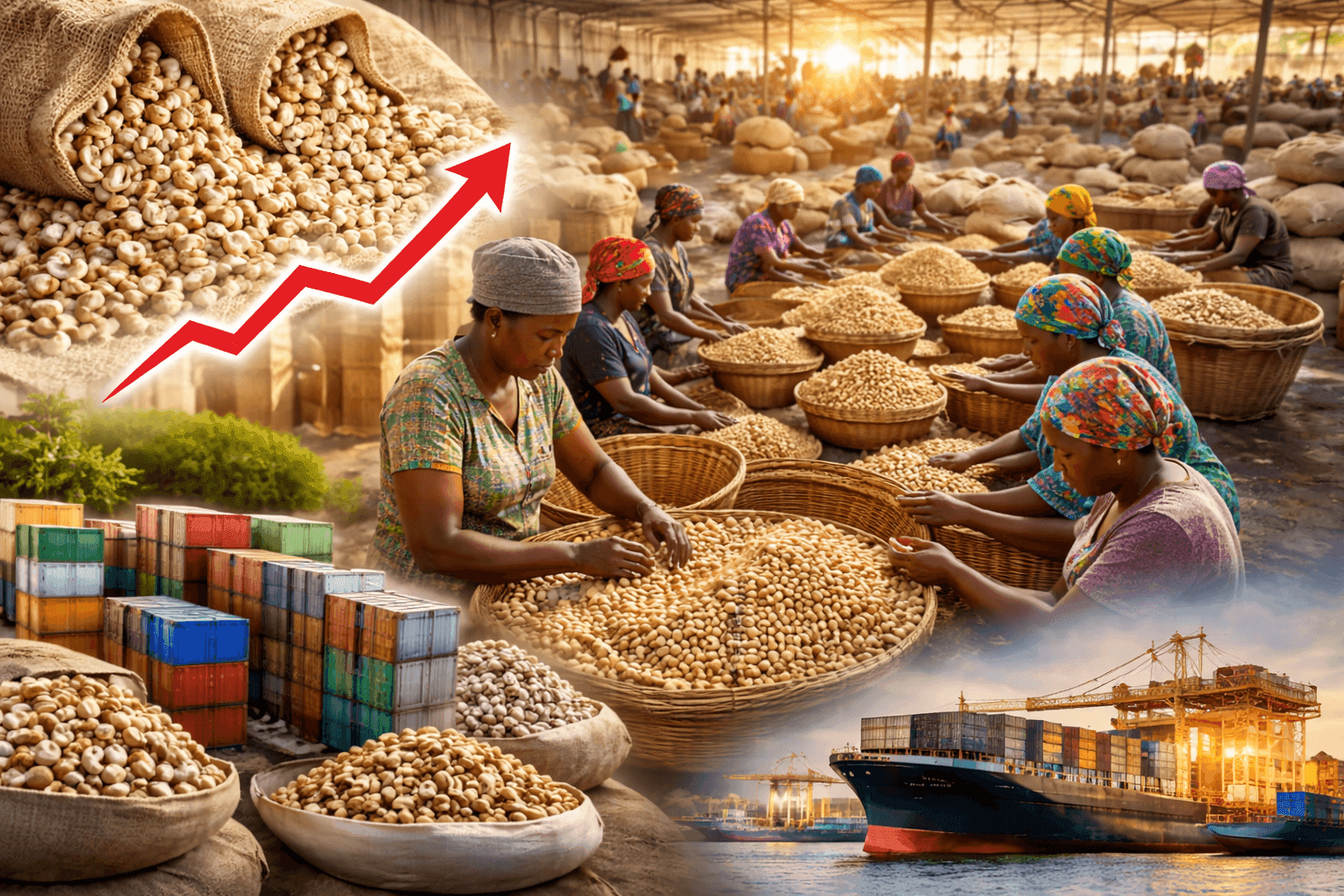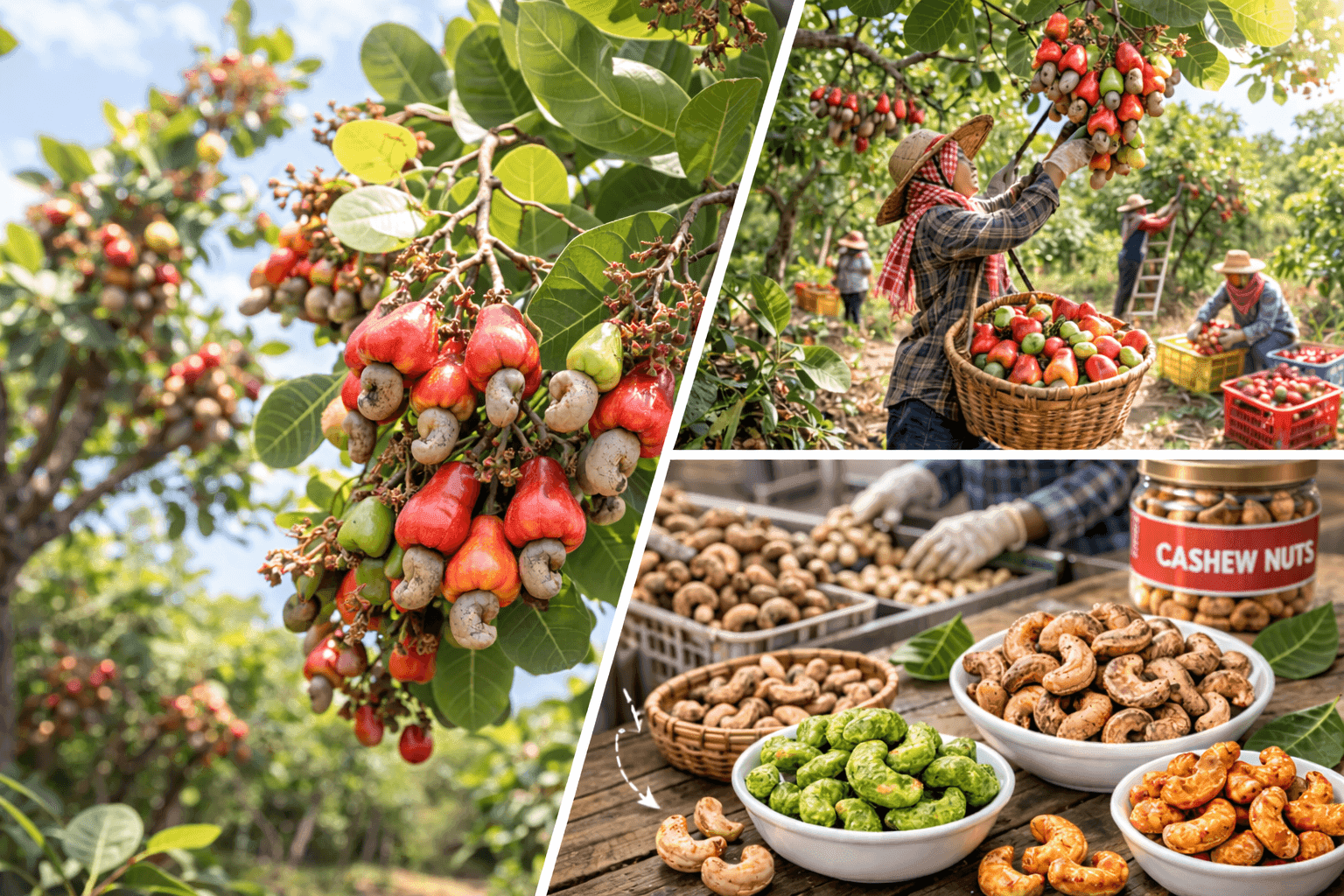


The global cashew industry is entering a pivotal transition as African producing nations accelerate efforts to process more of their crop domestically — challenging Asia’s long-standing dominance in the sector.
Governments in Ivory Coast, Tanzania, Benin, and Ghana have introduced export restrictions, policy incentives, and industrial zone developments aimed at increasing in-origin processing. The strategy is clear: retain more value locally rather than exporting raw cashew nuts (RCN) to Asia for processing.
Production Strength vs. Processing Reality
Africa accounts for nearly 60% of global raw cashew nut production. Yet only 25–35% of that volume is currently processed within the continent.
India and Vietnam continue to dominate the processing segment, handling approximately 65–70% of global cashew kernel output. Their advantage is built on decades of investment in infrastructure, skilled labor, processing efficiency, and global export networks.
While Africa’s policy push is tightening the export flow of raw nuts, industry experts caution that replacing Asia’s processing dominance will not happen overnight. Developing competitive processing ecosystems requires substantial capital, workforce training, logistics upgrades, and operational expertise.
Rising Raw Material Pressure
The impact of Africa’s policy shift is already being felt in global markets. Export controls and increased local procurement have reduced raw material availability for traditional importing nations.
As a result, raw cashew nut prices have surged — in some cases climbing 1.5 to 2 times compared to levels seen three years ago. This has increased cost pressure on processors in Asia and heightened volatility across supply chains.
A Structural Industry Transition
Market participants increasingly view the shift as structural rather than cyclical. Africa is gradually expanding processing capacity to capture more domestic value, while major processing nations such as India remain heavily dependent on imported raw material.
This evolving balance is reshaping strategic priorities across the industry:
- Greater raw material price volatility
- Higher working capital requirements
- Increased focus on origin partnerships
- Stronger emphasis on processing efficiency and kernel conversion rates
Strategic Outlook
Industry analysts suggest the next decade in the cashew trade will be defined not only by production volumes but also by control over supply chains, operational efficiency, and access to raw material.
Cashew processing is no longer just a manufacturing business — it is a supply chain strategy.
As Africa builds capacity and Asia defends its competitive edge, global stakeholders are adjusting to a new reality in one of the world’s most important agricultural commodity markets.