CAC News
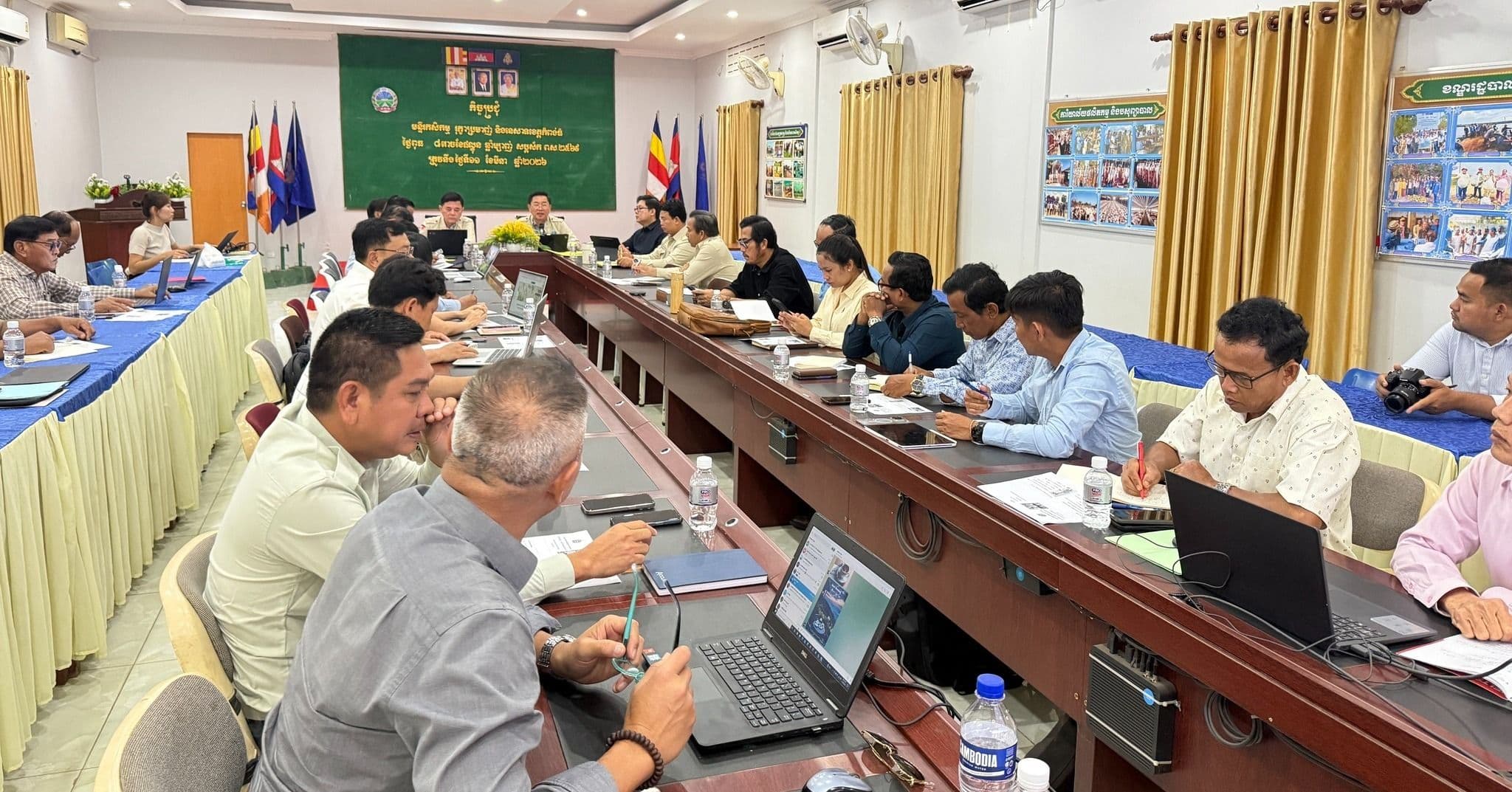
Kampong Thom, March 11, 2026 — Mr. Ma Vutthy, Vice President of the Cashew Nut Association of Cambodia (CAC), participated in a consultative meeting with key stakeholders from the cashew value chain to discuss challenges, technological improvements, and future development opportunities for Cambodia’s cashew sector.
The meeting was presided over by H.E. Toch Bun Hour, Secretary of State, and H.E. Dr. Meas Piset at the Department of Agriculture, Forestry, and Fisheries in Kampong Thom Province.
A total of 37 participants, including four women, attended the event. Participants included expert advisors from the Ministry of Agriculture, Forestry and Fisheries (MAFF), officials from the provincial agriculture department, and representatives from several relevant development projects supporting the cashew industry.
Field Visits and Technical Assessments
As part of the mission, the delegation conducted several key activities aimed at strengthening Cambodia’s cashew value chain.
First, the team conducted a study visit to cashew procurement and processing companies, as well as to the proposed site for the Cashew Agro-Industrial Park (CIP), planned and operated by the Royal Government of Cambodia. The visit allowed participants to examine current processing capacity and explore opportunities to improve value-added processing within the country.
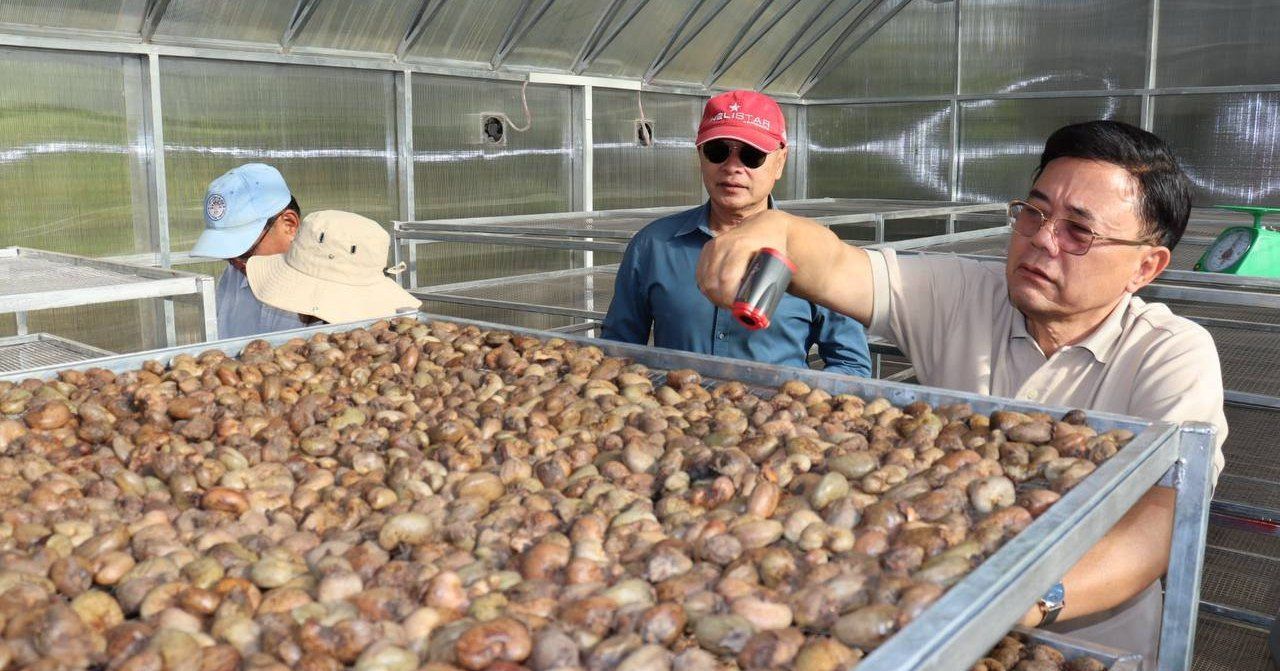
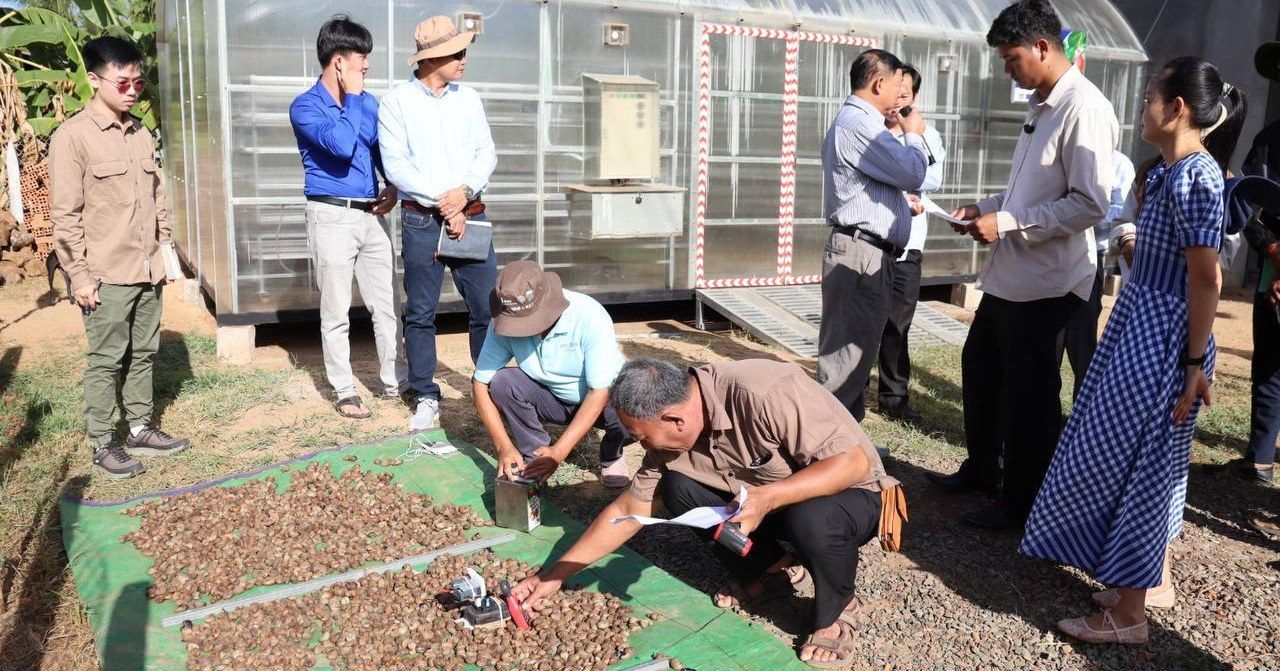
Second, the mission team conducted experiments comparing different cashew-nut drying methods, evaluating traditional sun-drying techniques against solar-powered drying houses.
Finally, a consultative meeting with cashew value chain stakeholders was organized to identify key industry challenges and discuss potential solutions and interventions that could support sector development.
Solar Drying Shows Faster Results
According to the experimental findings, cashew nuts dried under direct sunlight reached a maximum temperature of around 50°C, whereas those dried in a solar-powered drying house reached up to 70°C.
As a result, the drying process inside the solar drying house required only about two days, compared to three to five days using traditional sun-drying methods to reach the recommended 8 percent moisture content, which is considered optimal for long-term storage.
Need for Further Research
Despite the encouraging results, the mission team emphasized the need to improve sampling techniques and data measurement methods to ensure accurate evaluation of drying technologies.
Researchers recommended further experimentation to determine the optimal maximum temperature and minimum relative humidity levels inside solar drying houses, which can be adjusted to achieve the shortest drying time without affecting product quality. Maintaining quality is critical, particularly to prevent oil seepage from the shell into the kernel, which could reduce the value of the processed cashew.
Next Steps for Policy Consideration
During the consultative session, stakeholders discussed various technical and operational challenges within the cashew value chain, including processing efficiency, post-harvest handling, and infrastructure needs.
The mission team recorded the challenges and proposed solutions raised during the discussions. These findings will be compiled into a report for the leadership of the Ministry of Agriculture, Forestry and Fisheries, which may consider further interventions to support the continued development of Cambodia’s cashew industry.
Kampong Thom is one of Cambodia’s key cashew-producing provinces, and initiatives aimed at improving post-harvest handling and processing technologies are expected to play an important role in increasing productivity, reducing losses, and enhancing the competitiveness of Cambodian cashew products in international markets.
Reference ASPIRE-AT