
CAC News
Cambodia’s cashew sector is facing mounting challenges as rising diesel prices and adverse weather conditions begin to disrupt production, raising concerns over supply in the global raw cashew nut (RCN) market.
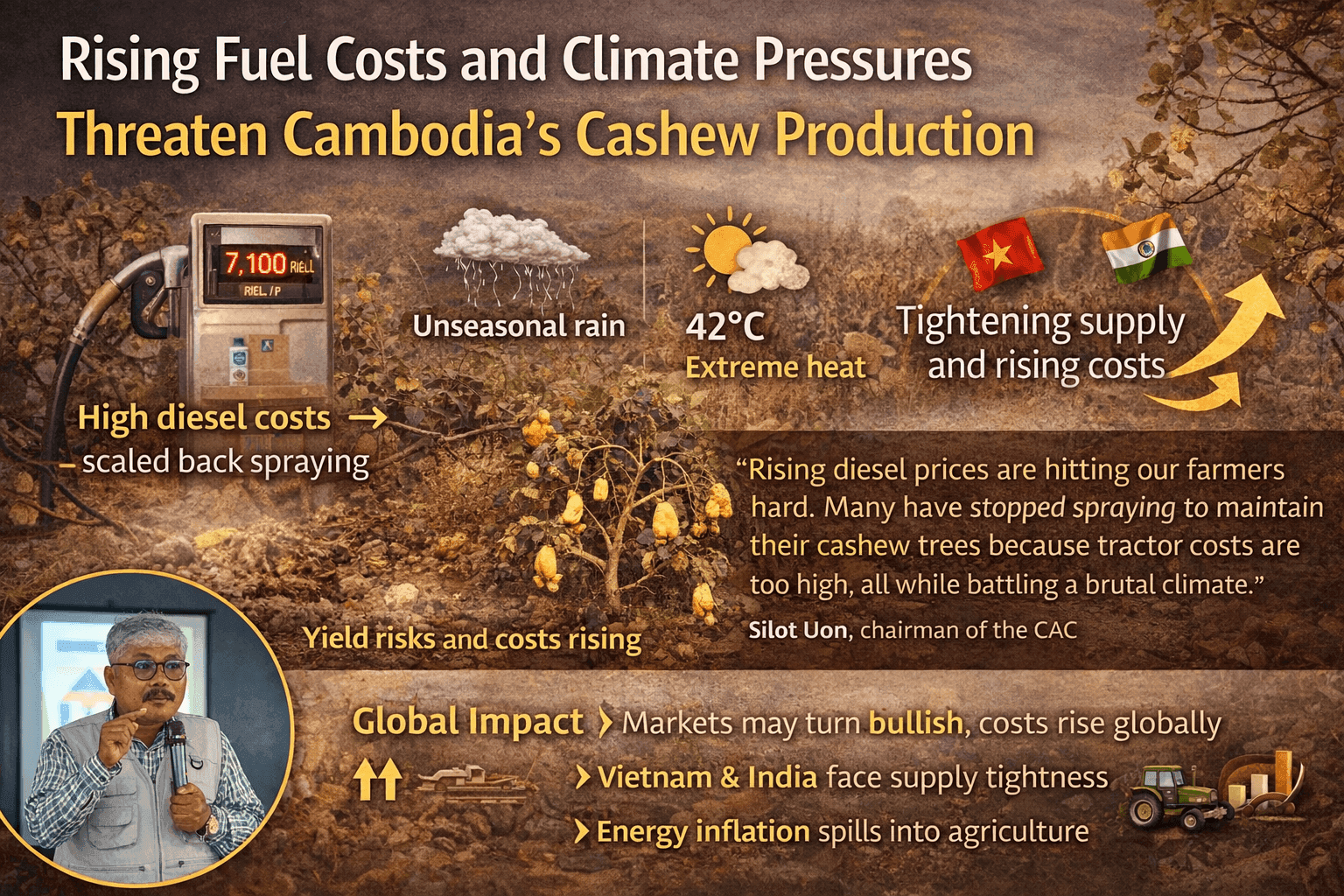
Diesel prices have surged to around 7,100 riel per litre, significantly increasing farmers' production costs. The spike in fuel costs has led many growers to scale back essential activities, such as pesticide spraying, as operating tractors and other equipment becomes increasingly unaffordable.
At the same time, erratic weather patterns — including unseasonal rainfall, prolonged cold periods, and extreme heat reaching up to 42°C — are affecting crop cycles. These conditions are heightening risks to flowering, fruit-setting, and overall yields, further compounding pressure on farmers.
Silot Uon, chairman of the Cashew Nut Association of Cambodia (CAC), said the combined impact of fuel inflation and climate stress is taking a toll on producers.
“Rising diesel prices are hitting our farmers hard. Many have stopped spraying to maintain their cashew trees because tractor costs are too high, all while battling a brutal climate,” he said.
Supply Concerns Extend Beyond Cambodia
Industry observers note that the situation is not limited to Cambodia and could have wider implications for the global cashew supply chain. Early signs point to a tightening in the availability of Cambodia-origin raw cashew nuts, a key supply source for major processing countries.
Vietnam, one of the largest buyers of Cambodian cashew, may move quickly to secure available supplies, while Indian processors could face increased competition and higher procurement costs.
The developments also highlight how energy-driven inflation is increasingly feeding into agricultural commodity pricing, linking global fuel markets with farm-level production costs.
Bullish Outlook for Raw Cashew Prices
From a trade perspective, the combination of rising input costs and climate-related disruptions is creating upward pressure on RCN prices in the short term.
Analysts point to a broader trend emerging across major producing regions: production costs are rising, supply risks are increasing, and sellers are showing stronger price resistance.
As these pressures persist, market participants are closely monitoring Cambodia’s production outlook, which could play a key role in shaping global cashew prices in the months ahead.