CAC News
Phnom Penh, April 3, 2026 — The Ministry of Commerce has officially registered four new products as Geographical Indications (GI), marking a significant milestone in strengthening Cambodia’s product identity, protecting intellectual property, and expanding access to international markets.
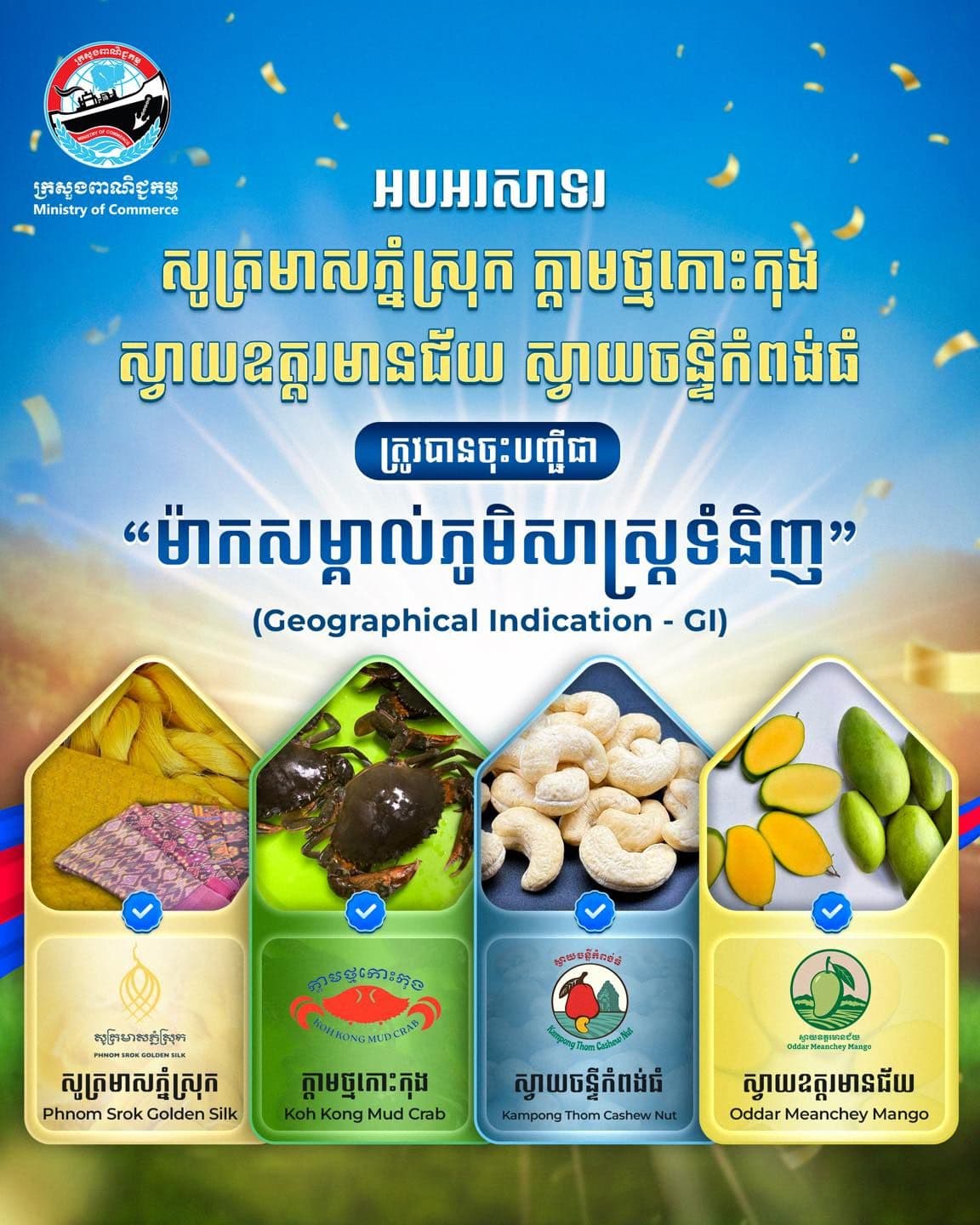
The newly recognized GI products are:
- Phnom Srok Golden Silk, known for its fine, lustrous threads, natural dyes, and chemical-free production
- Koh Kong Mud Crab, prized for its firm texture and naturally sweet flavor from mangrove habitats
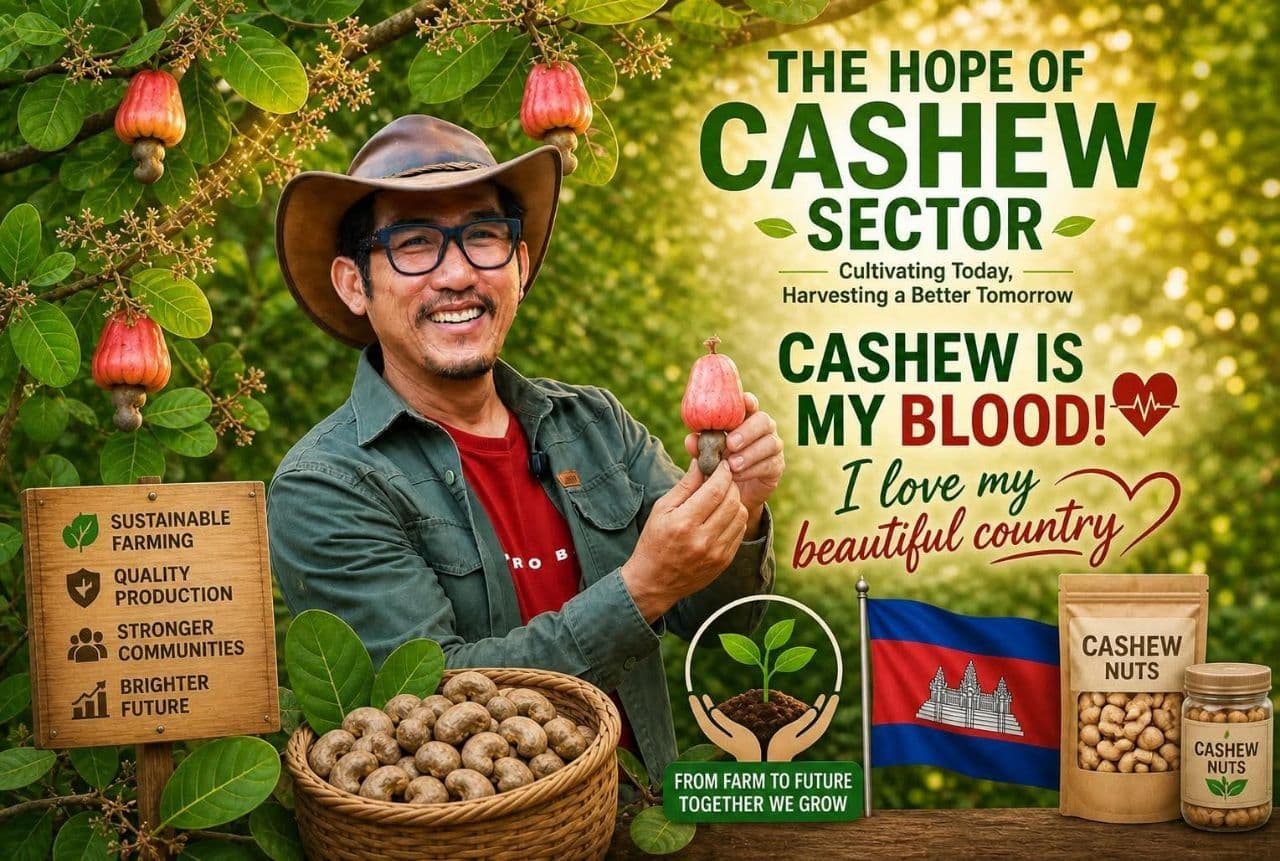
- Kampong Thom Cashew Nut, distinguished by large, crunchy kernels with a rich buttery taste
- Oddar Meanchey Mango, featuring firm flesh and a balanced sweet-and-sour flavor suitable for processing
Officials said the GI registration highlights the unique geographical origins, natural conditions, and traditional production methods that give these products their distinct quality and reputation.
The designation provides several key benefits, including legal protection against counterfeit products, preservation of traditional knowledge, and increased opportunities for tourism and environmentally sustainable production. It also enhances the market value of these goods, supports their expansion into global markets, and paves the way for international GI recognition.
Silot Uon, President of the Cashew Nut Association of Cambodia (CAC), welcomed the inclusion of Kampong Thom cashew nuts, describing it as a major step forward for the sector.
“This creates a premium identity for Cambodian cashews, allowing them to stand out in international markets,” he said.
He added that the GI status opens new opportunities for branding and export growth, particularly in high-value markets such as the United States, Japan, South Korea, and the European Union. The use of official GI labeling is expected to support higher pricing, while stricter quality standards will encourage improved farming practices among nearly 25,000 cashew farmers.
The move underscores Cambodia’s broader strategy to elevate its agricultural products, strengthen competitiveness, and secure a stronger foothold in the global marketplace.
Reference FB MoC