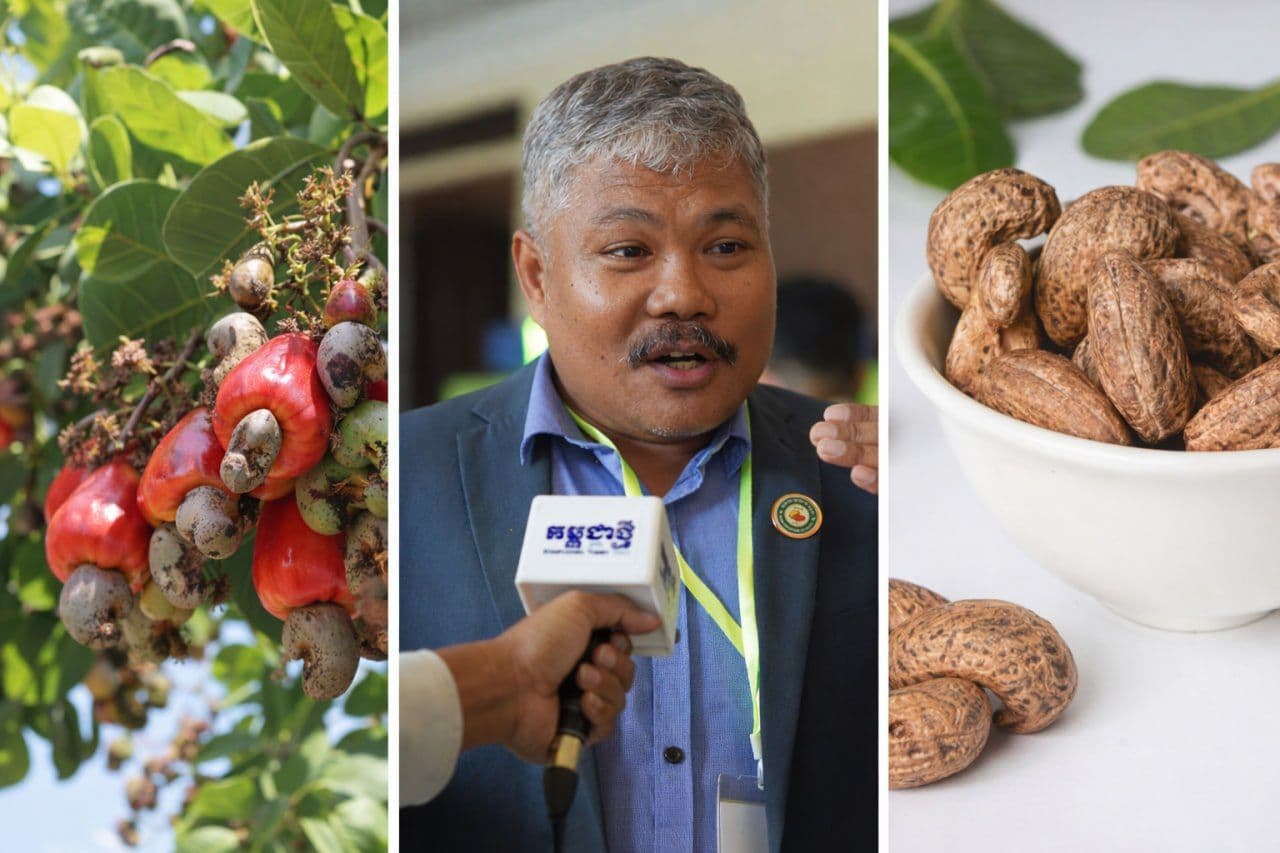
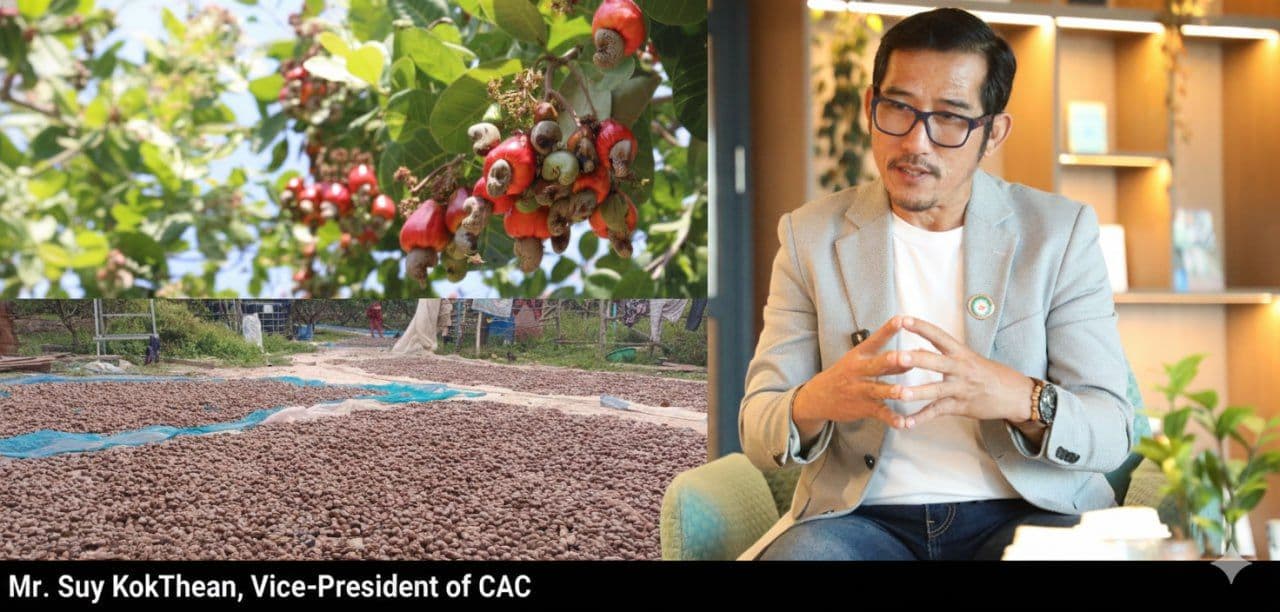
With Cambodia ranking second as the world’s cashew-producing country, it is only natural that the Kingdom aspires to take the number one spot. The forthcoming World Cashew Conference 2026 (January 30-February 1), to be attended by over 650 delegates, will deliberate on some of the pressing issues the sector is facing. Khmer Times caught up with Suy Kokthean, vice president of the Cashew nut Association of Cambodia (CAC), who will participate as a speaker at the WCC 2026, to know how Cambodia’s cashew sector will be benefitted by the global meet.
KT: When will the WCC 2026 take place, and what is your main objective in attending the conference?
The WCC is organised annually and brings together investors and stakeholders in the cashew sector from countries around the world. As Cambodia is currently ranked second, our association expects that the Kingdom will become the world’s number one cashew-producing country within the next three to five years. This is because we produced approximately one million tonnes in 2025, a volume that is expected to increase annually as our cashew cultivation area continues to expand.
Our objective in participating in the WCC is to promote the potential of Cambodia’s cashew sector to the world, so that people recognise that although Cambodia is a small country, it has abundant cashew resources that are secure and attractive for investors from around the world. We also want to demonstrate how supportive our laws and regulations are towards the agricultural sector, especially with regard to cashew production.
KT: How important is this conference for Cambodia’s cashew sector?
The WCC 2026 is extremely important in terms of gaining global recognition that Cambodia is a major cashew-producing country. I should add that this recognition has largely come through the WCC. Four years ago, our association participated in the World Cashew Conference, and participants were truly surprised to know that Cambodia produced more than 1.1 million tonnes of cashew nuts. Many were left astonished and asked where Cambodia is located. Since then, investors have taken an interest in Cambodia.
We have significant potential, but in the past, we did not effectively showcase this potential to the world. Through the WCC, however, we are presenting everything we have, especially our cashew nuts, which are known for their large kernels and excellent flavour, qualities that are relatively rare globally. Cashew cultivation accounts for up to 70 percent of the country’s total cultivated area.
KT: How do you assess Cambodia’s competitiveness in the global cashew nut market? Tell us the key factors that make Cambodian cashew nuts stand out compared to other producing countries?
In terms of supply capacity and competitiveness, our products are strong. Our yields and harvest output per cultivated area are competitive compared to others. However, when it comes to price competitiveness in processed cashew products, we still have limited capacity because we are only at the early stages of development. As a result, our technology and technical skills remain limited.
Nevertheless, I am confident that in the near future we will be able to compete globally, as technological advancements today are progressing very rapidly.
KT: What opportunities do you see for attracting investment, technology transfer, or international partnerships?
I see a strong opportunity for Cambodia to attract investment, as the global trend is shifting toward producing and processing goods in the countries where they are grown, rather than transporting them over long distances.
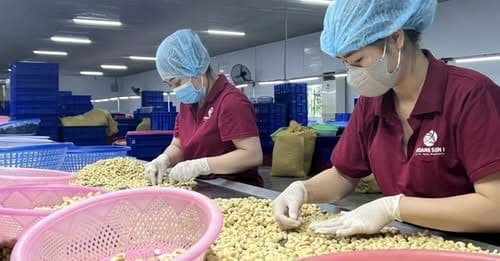
In the past, and even up to the present, Vietnam — currently the largest processing country — has imported raw cashew nuts from Cambodia, Africa, and other countries, processed them, and then exported the products to markets such as the United States and Europe. However, in the current era, this model is no longer necessary.
With rapid technology transfer, cashew nuts can now be grown, raw materials produced and processed in Cambodia, and exported directly to international markets. This helps reduce repeated transportation and logistics costs, enabling investors to achieve higher profitability.
KT: What are the main challenges Cambodia’s cashew sector is facing today, and what measures is the CAC taking to address them?
In terms of cultivation, Cambodia faces some minor challenges, particularly climate change, which is beyond our control. However, regarding cultivation techniques and farm management, we do not face any significant problems. In fact, some countries in Africa have requested technical advice from the CAC on cultivation, maintenance, and yield improvement. Our yield per hectare is among the highest, so cultivation itself is not a major challenge.
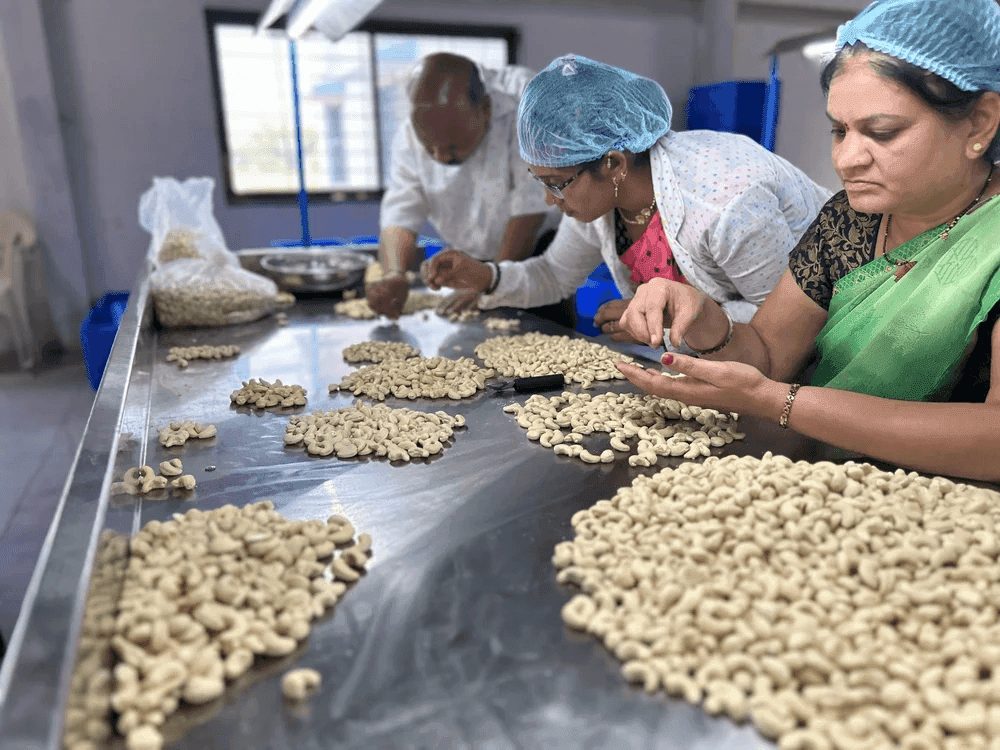
The main challenges lie in processing and exports, as Cambodia is still very new in these areas. That said, I have observed that relevant ministries are actively working on these issues, especially as the Royal Government is paying close attention, such as through the establishment of a cashew agro-industrial park in Kampong Thom province.
Currently, CAC is focusing on three key areas. First, cultivation, where we continue to promote training for farmers to improve the quality and productivity of cashew production. Second, trading, where, due to the limited number of processing factories, CAC is encouraging short-term trading of raw cashew nuts. We aim to strengthen raw cashew trading with countries beyond Vietnam, such as India and China. If only one country purchases from Cambodia, it could create a monopoly over our market, which would negatively affect Cambodian farmers. Therefore, we seek competition from multiple markets to prevent any single market from dominating Cambodia’s cashew sector.
Third, we are working to promote processing capacity through practical training, experience-sharing, study visits, and increased business-to-business (B2B) engagement. This helps stakeholders better understand the cashew business. At the same time, we strive to facilitate international investors by providing coordination and support for investment in Cambodia to the best of our ability.
KT: Looking ahead, what is CAC’s vision for the development of Cambodia’s cashew sector, particularly in terms of value addition, market expansion, and improving farmers’ incomes?
I remain very optimistic about the future of Cambodia’s cashew sector, especially in terms of value addition, cultivation, and processing. Currently, with support from the Food and Agriculture Organization (FAO) in Kampong Thom province, we are working to establish a Geographical Indication (GI) association. Once the GI is established, we will promote Cambodian GI cashew products to global markets such as Europe and the US.
Developed countries demand products that are high quality, safe, and that genuinely benefit farmers, not necessarily products that only benefit traders. We have also facilitated B2B connections between farmers and buyers or processors, aiming to reduce intermediaries as much as possible to narrow profit gaps and lower production costs for farmers.
I observe that emerging markets such as China, Australia, Japan, and the United Arab Emirates are having an increasing influence on Cambodia’s cashew sector. I believe that demand for cashew nuts will continue to expand in the future. Therefore, I remain confident that cashew will play an important role in both domestic and international markets. If we manage the sector properly, cashew prices will remain stable, which will be a positive factor for our cashew farmers as well.