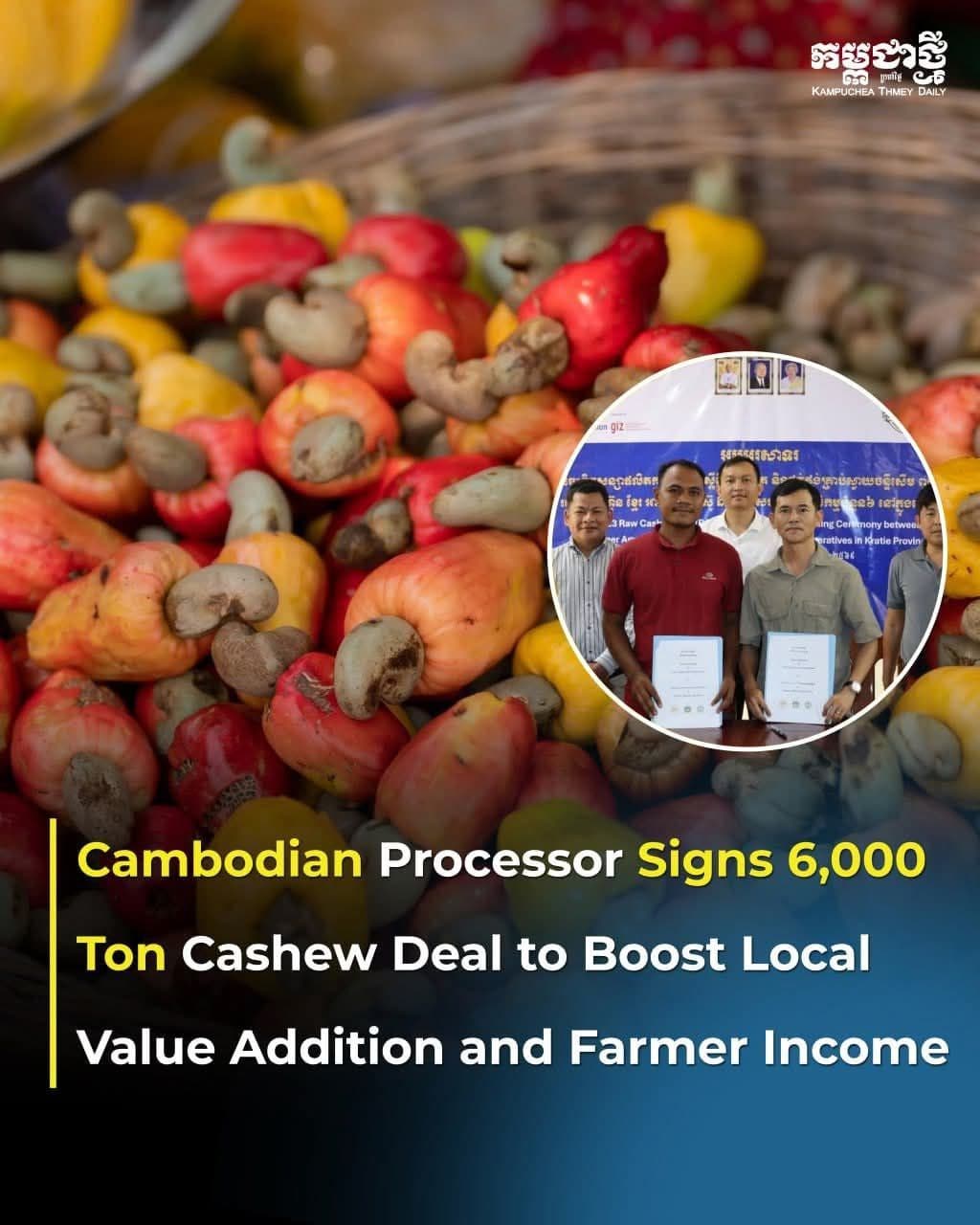
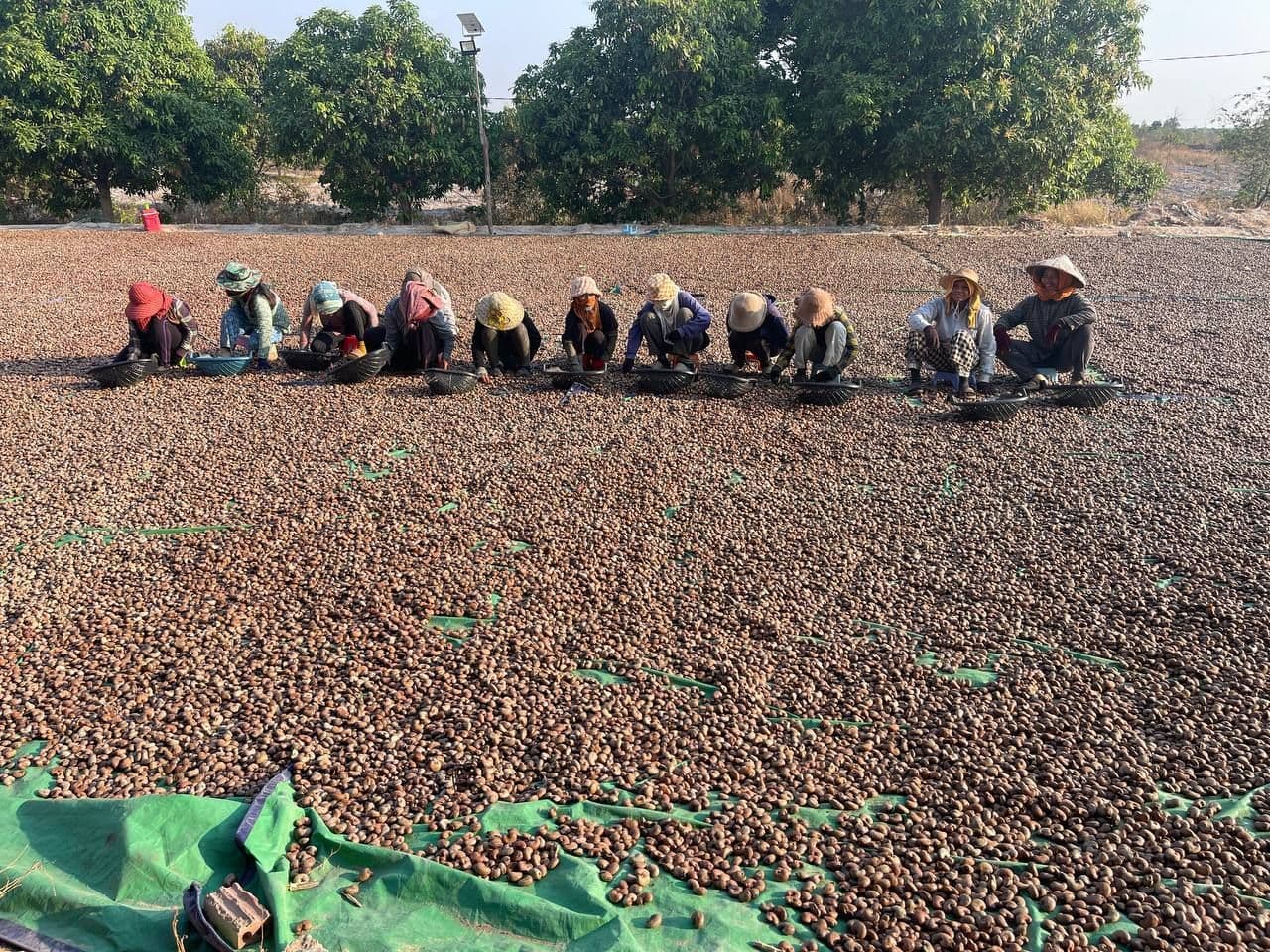
Cambodia has rapidly become one of the world’s largest producers and exporters of raw cashew nuts, with recent data showing a harvest of around 1.020 billion tonnes in 2025, generating approximately $1.5 billion in export revenue — up more than 25 per cent from the previous year, according to preliminary figures from the Cashew Nut Association of Cambodia (CAC).
Despite this boom, the vast majority of Cambodian cashews are shipped abroad unprocessed, mainly to Vietnam, where they are shelled, roasted and sold at far higher prices.
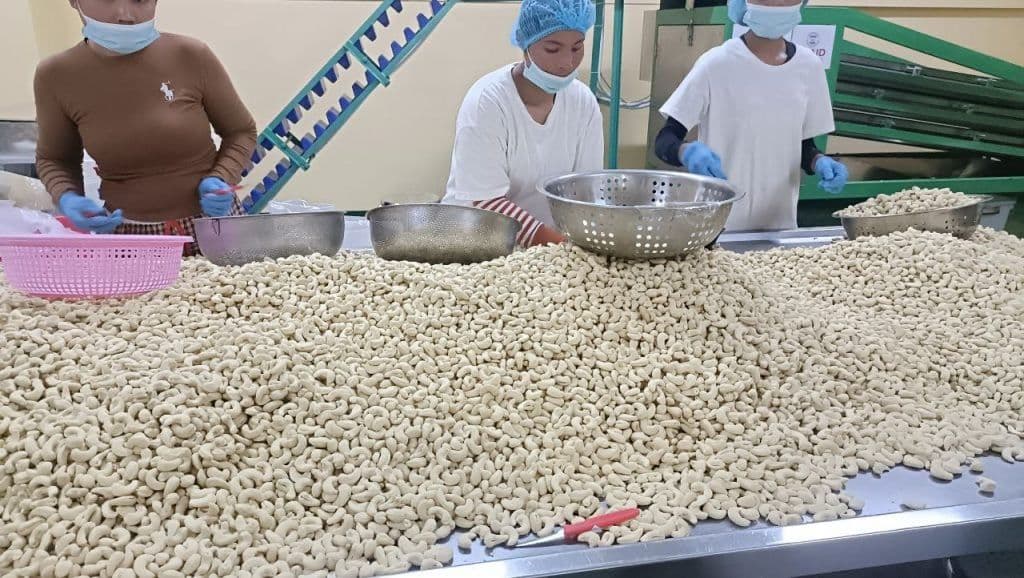
The reason Cambodia exports so much raw product lies in the nature of cashew processing itself. Cashew nut shells contain a caustic liquid, making processing hazardous without specialised equipment. Building and operating processing facilities requires significant investment in machinery, training and safety systems — all of which raise upfront costs and risks for investors.
Cambodia currently has a small number of processing plants, many of them small or seasonal operations, and only a fraction of the crop is handled domestically.
Beyond equipment costs, financing poses a major hurdle. Processors must buy raw nuts at harvest, pay labour and utilities over weeks or months of processing, and only then sell finished kernels. Banks in Cambodia tend to be cautious about lending to such ventures, especially without reliable collateral or guaranteed buyers, making export of raw nuts — with immediate payment and minimal holding costs — far more attractive to traders and farmers.
Infrastructure also matters: Raw nut exports require far less electricity, clean water, cold storage and logistics than processing. In export hubs or processing zones in neighbouring countries, these facilities are often already in place. That gives processors in those countries — especially in Vietnam — a head start, reinforcing a cycle in which offshore processing continues to outcompete domestic value-addition.
This dynamic is clear in export figures. In 2024, Cambodia exported 815,000 tonnes of raw cashew nuts worth $1.15 billion, with around 97 per cent shipped to Vietnam alone. In contrast, only a small share of the crop is processed inside Cambodia, with estimates suggesting that about 90–95 per cent of raw nuts are exported before processing.
The value gap is significant. Globally, processed cashew kernels can fetch three to four times the price of raw nuts, depending on quality, roasting and certification. But capturing that value domestically requires not just factories, but quality control, marketing, consistent standards and export channels — systems still under development in Cambodia.
Recognising this, the Cambodian government has adopted the National Cashew Policy 2022–2027, which aims to boost local processing capacity, diversify export markets, and increase the share of processed cashews to at least 25 per cent by 2027 and higher thereafter.
Progress has been incremental: local processing reportedly rose from about 5 per cent to 10 per cent in recent years, but remains limited.
There are signs of future change. Planned investments in industrial parks and large processing plants, as well as interest from foreign firms, suggest domestic capacity may expand.
For now, most Cambodian cashews are still shipped raw, leaving much of the potential value-addition in the hands of processors abroad.
In short, Cambodia’s cashew sector is thriving in volume and export revenue but still loses out on value capture because processing — the step that turns raw nuts into high-margin consumer products — remains capital-intensive and challenging to scale domestically. Addressing that gap will be crucial if the country wants to turn its raw crop into a more powerful engine of economic growth.