CAC News
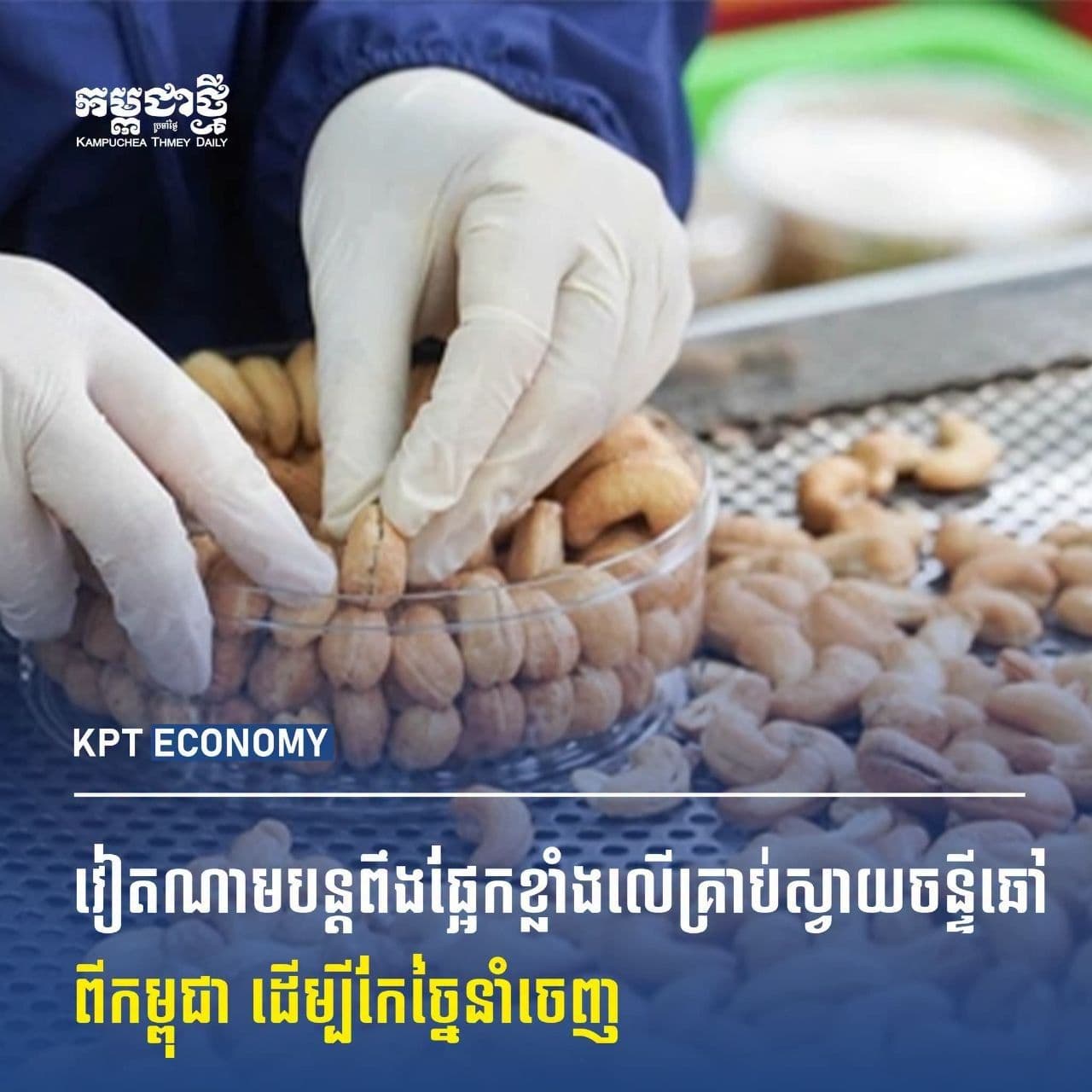
HCM, July 2026 — Vietnamese businesses spent more than US$3 billion importing raw cashew nuts during the first half of 2026, with Cambodia maintaining its position as the country's largest supplier, according to Vietnam Customs data.
Figures released for the period ending July 15 show that Vietnam imported 1.81 million metric tons of raw cashew nuts worth approximately US$3.02 billion, representing a 4% increase in volume and a 12.3% rise in value compared with the same period in 2025.
Cambodia continued to dominate Vietnam's raw cashew supply, accounting for 54.2% of total import volume and 56.3% of total import value. Vietnamese processors imported approximately 980,700 metric tons of raw cashew nuts from Cambodia, valued at more than US$1.7 billion, up 10.3% in volume and 25.9% in value year-on-year.
Data from Vietnam Customs also indicate that Cambodia remained Vietnam's leading source of imported raw cashew nuts during the first six months of 2026, ahead of Côte d'Ivoire and other producing countries. Côte d'Ivoire supplied approximately 213,354 metric tons, while imports from other origins totaled around 583,580 metric tons, according to the import market statistics.
Vietnam also sourced raw cashew nuts from several other countries, including Côte d'Ivoire, Tanzania, Indonesia, and other African producers, reflecting the country's continued reliance on imported raw materials to meet processing demand.
As the world's largest exporter of cashew kernels, Vietnam depends heavily on imported raw cashew nuts because domestic production is insufficient to supply its extensive processing industry. After processing, Vietnamese manufacturers export cashew kernels and value-added products to major markets, including the United States, China, and Europe.
During the same period, Vietnam exported nearly 373,800 metric tons of cashew products, generating almost US$2.63 billion in export revenue. While export volume declined slightly from a year earlier, export value increased by 3.1%, supported by stronger international prices.
Despite robust exports, the industry's import bill continued to exceed export earnings, resulting in a trade deficit for the sector. Industry observers attribute the imbalance to sustained demand for raw materials and the widening gap between Vietnam's processing capacity and domestic raw cashew production.
The figures underscore Cambodia's growing importance in the regional cashew supply chain, with the Kingdom remaining the largest supplier of raw cashew nuts to Vietnam's processing industry. As Cambodia continues expanding its domestic processing capacity under its national cashew development strategy, policymakers aim to retain a larger share of the value generated from the country's annual cashew harvest while strengthening exports of processed cashew products.
Reference: VN Express