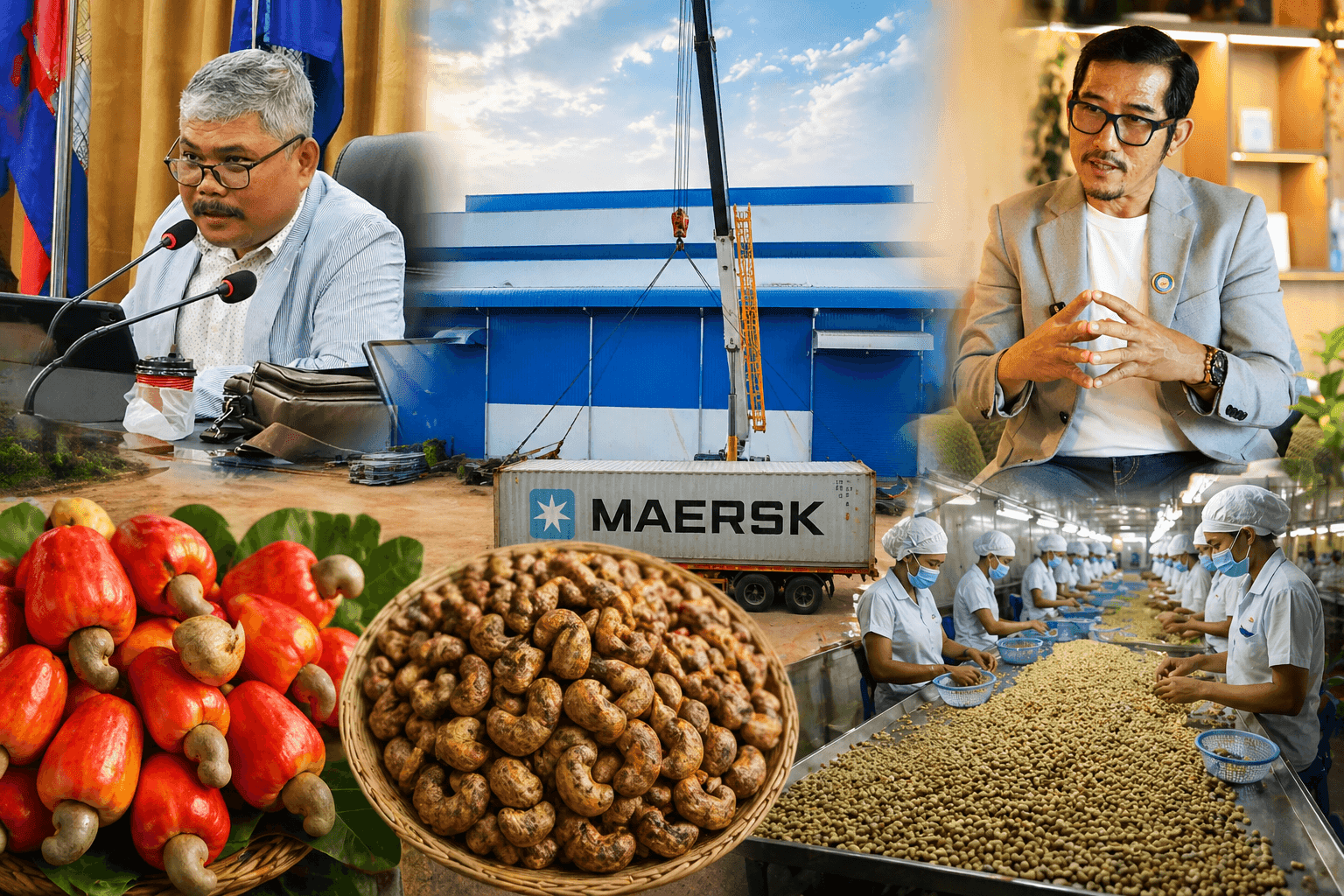
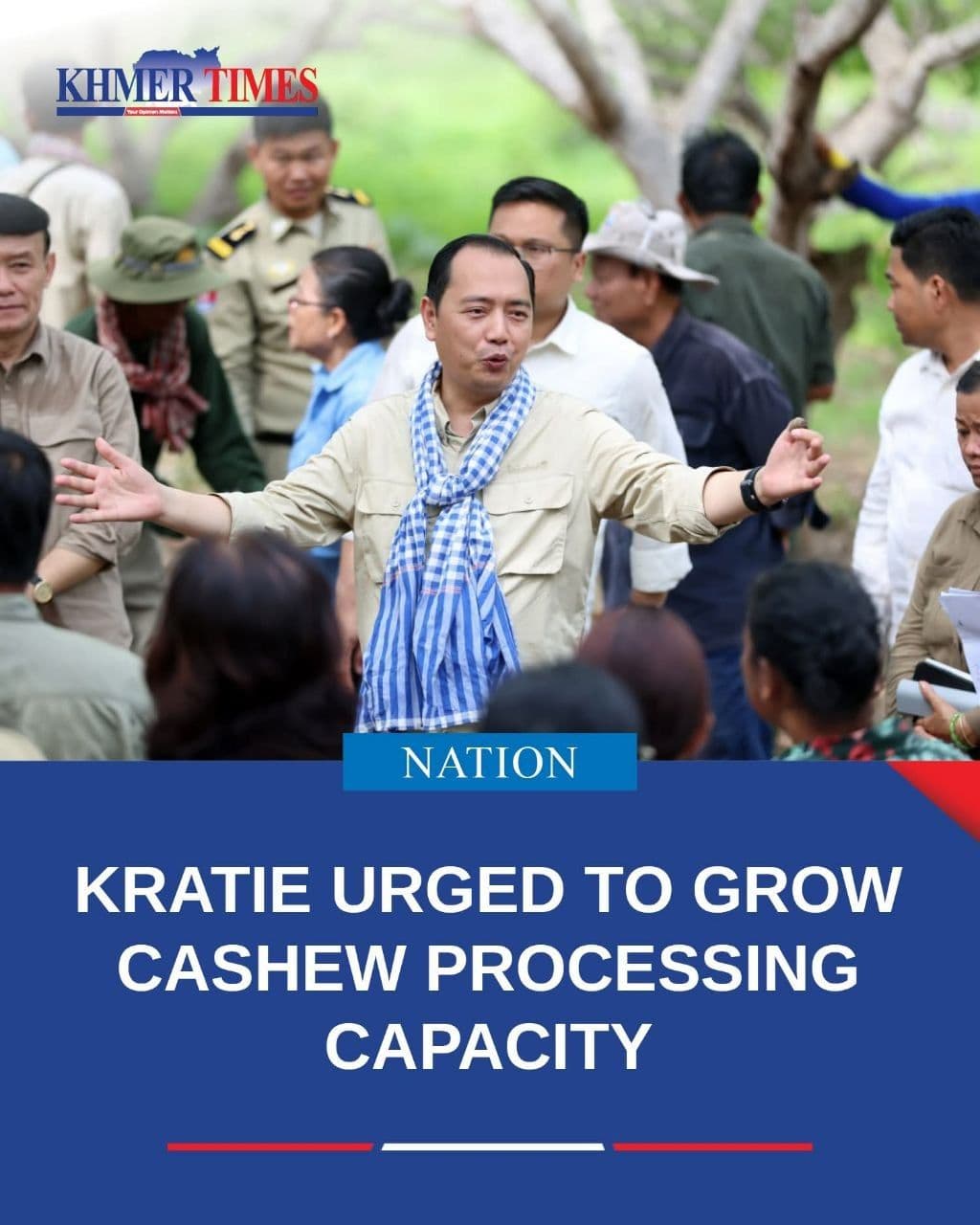
Information Minister Neth Pheaktra has called for greater investment in cashew-processing facilities in Kratie province, Cambodia’s second-largest cashew-growing area, to increase the value of agricultural products and expand exports of semi-finished and finished cashew products.
During a visit to cashew plantations in Kratie province on Saturday, Pheaktra said the government is encouraging the development of domestic processing capacity instead of exporting the cashew nuts raw to neighbouring countries.
Pheaktra, who is also chairman of the Royal Government Working Group for Kratie province, said Cambodian cashew nuts are recognised for their quality and flavour.
“Our cashew nuts are of good quality in terms of taste,” he said. “We must maintain the reputation of the good quality of our cashew nuts.”
The minister also urged farmers not to abandon cashew cultivation because of rumours about alternative crops.
“I encouraged our farmers not to believe rumours and to cut down cashew trees in favour of other fruits,” he said.
He added that the government is continuing its efforts to stabilise fuel prices to support farmers and transport activities.
Pheaktra said the visit was intended to help him better understand the livelihoods and concerns of local farmers.
According to Leang Punloeu, chief of the Agro-Industry Office at the Provincial Department of Agriculture, Forestry and Fisheries, Kratie province currently has about 110,000 hectares of cashew plantations, making it the country’s second-largest cashew-producing province after Kampong Thom.
“We have a total of 110,000 hectares, of which around 100,000 are productive cashew plantations,” he said. “This means we can collect around 200,000 tonnes of cashew nuts per year.”
Punloeu said most wet and dried cashew nuts produced in the province are exported to Vietnam for processing.
“If we have processing facilities, we can process the products ourselves and export finished products abroad,” he said.
Farmer Chuon Sinat, 65, said he cultivates six hectares of cashew plantations and harvests around one tonne per hectare.
He said rising fertiliser prices remain a major challenge for farmers.
Meanwhile, cashew trader Men Sles, who has been in the business for 17 years, said he purchases cashew nuts from farmers at between 5,000 and 5,500 riel per kilogramme.
“During the peak harvest season, I spend around 30 million riel per day buying both wet and dried cashew nuts,” he said.
Cambodia is the world’s second-largest producer of raw cashew nuts, but it currently processes only 5% to 10% of its harvest domestically, with most exports going to Vietnam.
According to the Cashew Nut Association of Cambodia, the Kingdom is accelerating efforts to expand its cashew processing industry in 2026, aiming to process 25% of its annual raw cashew harvest, which ranges from 800,000 to one million tonnes, up from 2.4% in 2025.