
CAC News
Phnom Penh, November 10, 2025 — Cashew has emerged as a more profitable crop than rice in Cambodia when comparing returns by farmland area, according to recent agricultural reports.
While paddy rice remains the country’s staple crop, cultivated on around 4 million hectares, it generates approximately USD 1.2 billion annually and requires high input costs. In contrast, cashew occupies only about 700,000 hectares but earns an estimated USD 1.4 billion each year.

The Cashew Nut Association of Cambodia (CAC) noted that although cashew is not the most profitable crop overall, it is particularly suitable for poor, non-flooded soils. The association recommends farmers use less fertile land for crops such as cashew and mango, while reserving fertile soil for more input-intensive and profitable crops.
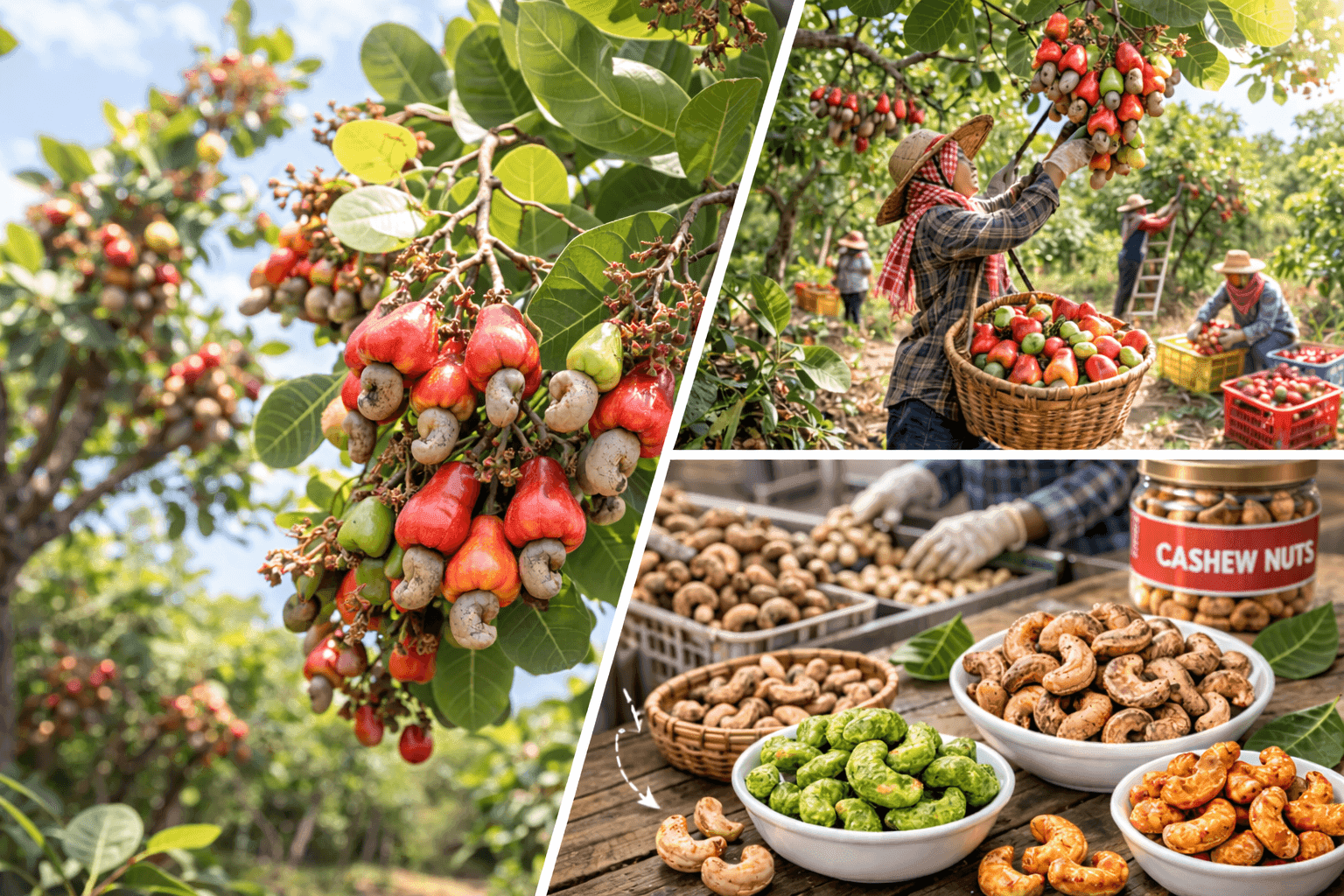
Rice production in Cambodia has increasingly relied on mechanization, but cashew farming remains labor-intensive, especially during the harvest season when workers must manually pick and separate the cashew apples and nuts. This reliance on manual labor has become a growing concern amid rising rural labor costs.
As Cambodia’s rural living standards improve, many workers have shifted toward industrial and service sectors, seeking higher incomes and leaving a shortage of agricultural labor. This trend mirrors developments in Vietnam, where industrial growth has also drawn workers away from the cashew sector.

Despite labor challenges, Cambodia’s cashew industry continues to thrive. In the first ten months of 2025, the country exported nearly 1 million tonnes of raw cashew nuts to Vietnam, generating approximately USD 1.47 billion, according to data released by Vietnam’s General Department of Customs on November 6, 2025.
The CAC reported similar export figures earlier in August 2025, confirming Vietnam’s continued role as Cambodia’s largest export market for raw cashew nuts.

Looking ahead, experts predict that while Cambodia may face ongoing labor shortages over the next decade, cashew cultivation is expected to expand steadily, driven by strategic land-use recommendations and strong regional demand.