CAC News
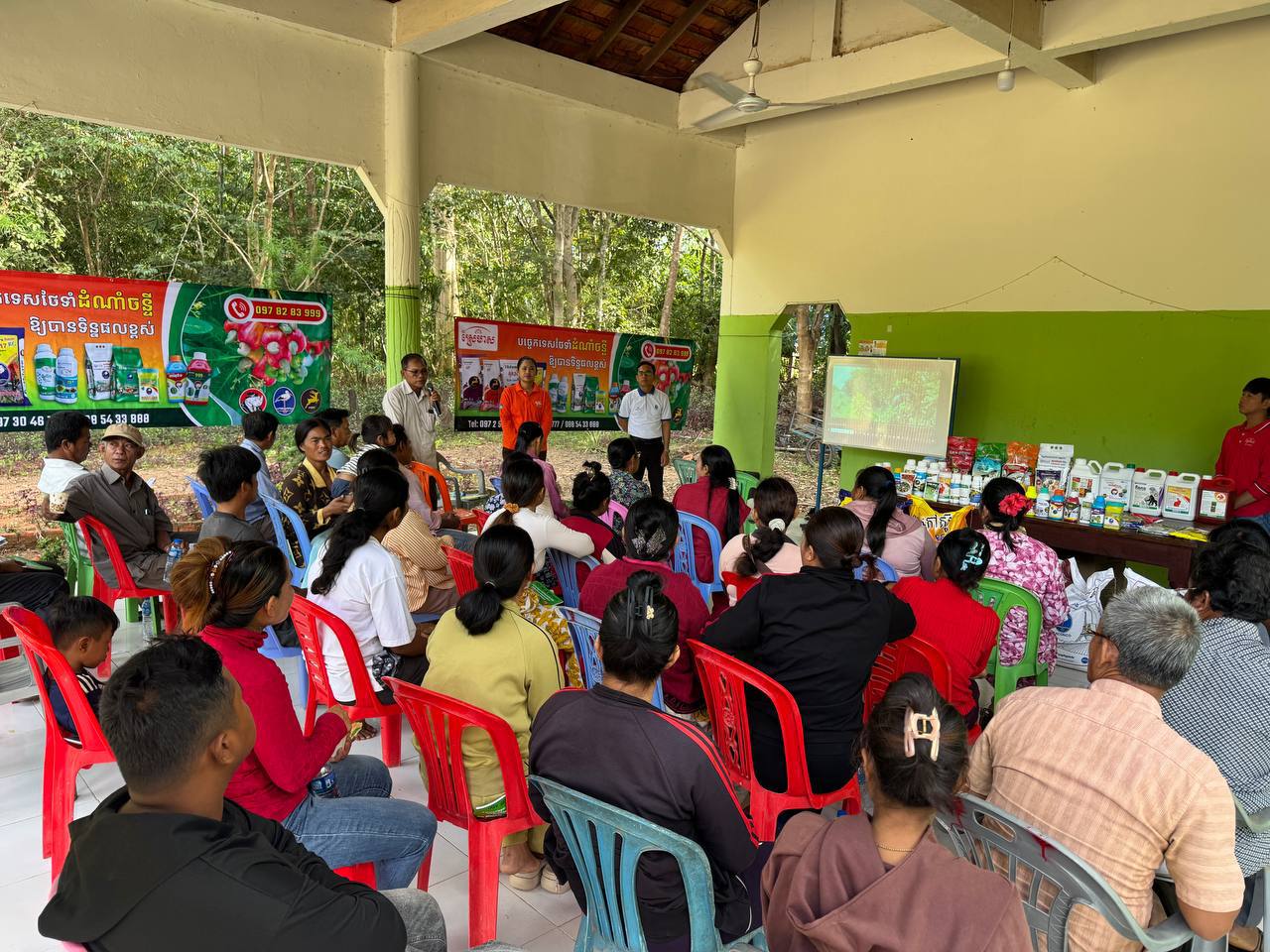
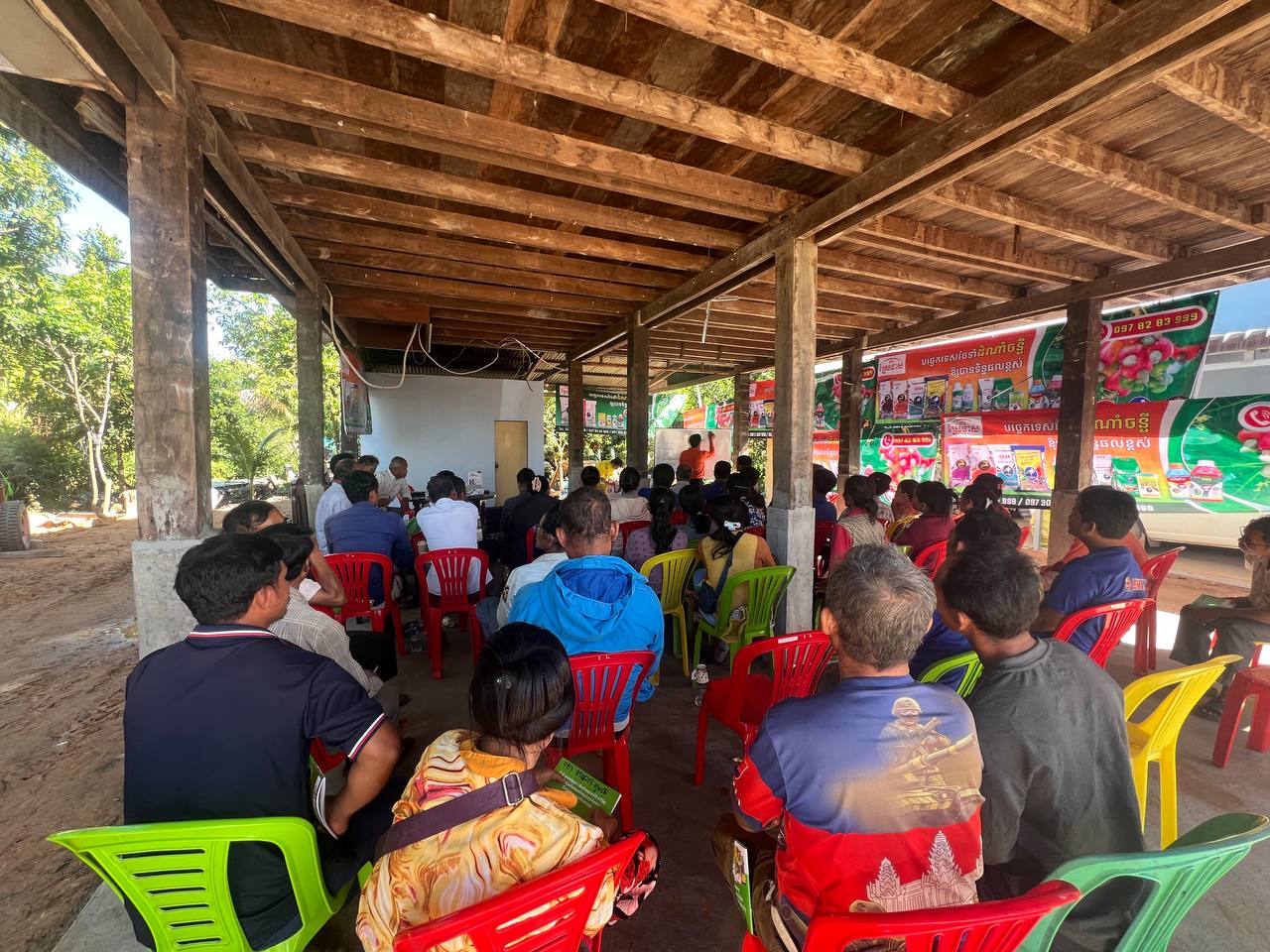
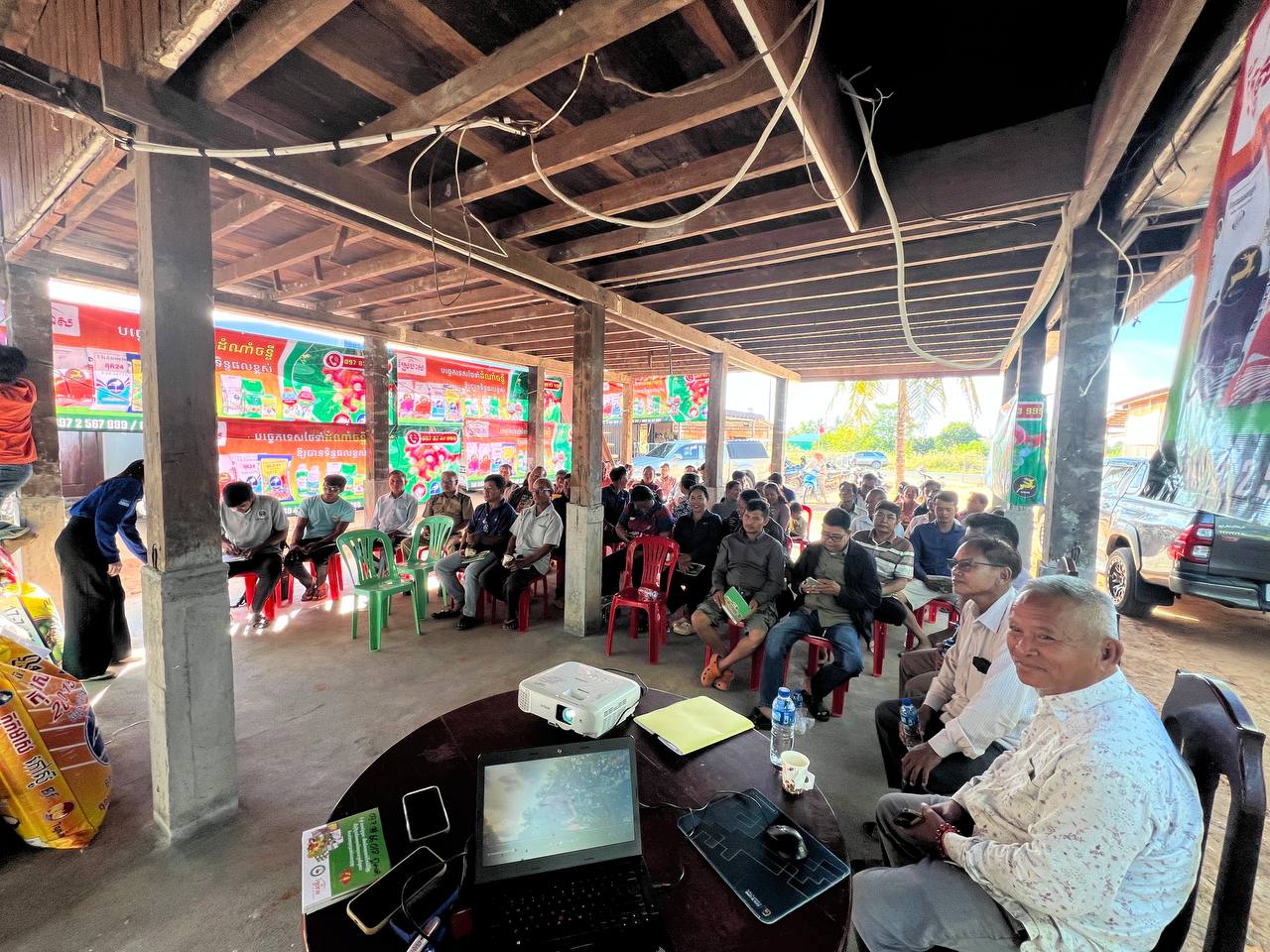
STUNG TRENG, November 22, 2026 — The Cashew Nut Association of Cambodia (CAC), in collaboration with Sre Meas, a prominent agricultural input company, conducted an agricultural outreach and technical training session for cashew farmers in Stung Treng Province, focusing on cultivation techniques to improve productivity and crop quality.
The training was held from 8:00 a.m. to 11:00 a.m. in Reacheanukol Village, Sangkat Stung Treng, Krong Stung Treng. It brought together 50 farming households from the Ou Pong Moan Community, a member of CAC, who collectively cultivate 221.5 hectares of cashew plantations, primarily growing the M23 and H09 varieties.
The session was led by representatives of the Ou Pong Moan Community and technical specialists from CAC, including Sre Meas master trainers, who shared practical knowledge and recommendations on cashew cultivation and plantation management.
Addressing Key Challenges in Cashew Production
During the discussion, farmers shared their current plantation conditions and production challenges. Most participating farmers had already applied granular fertilizers, while some had used defoliation formulas that caused approximately 30–40% leaf drop, resulting in uneven flowering across their plantations.
Although many trees were producing abundant new shoots and flower buds, farmers continued to face several production constraints, including infestations of stem borers, leaf rollers and tea mosquito bugs. Other concerns included poor fruit setting and the shriveling of young cashew nuts, particularly during periods of heavy fruit setting.
Participating farmers reported current yields ranging from 2 to 3.5 metric tonnes per hectare, highlighting the importance of improving plantation management to maintain healthy trees and increase productivity.
Technical Guidance on Plantation Management
The training covered a range of practical topics addressing the challenges faced by local cashew growers. Key discussions focused on managing leaf defoliation and uneven flowering, improving weak and yellowing foliage, and properly managing new shoots to ensure healthy, high-quality leaves.
Pest and disease management was another major focus. Technical specialists shared guidance on controlling tea mosquito bugs, leaf rollers, thrips, aphids and anthracnose, as well as addressing fungal problems associated with dew and excessive moisture.
The session also examined ways to prevent flower blight and drying, alongside measures to reduce the shriveling of both small and large young nuts. Farmers received advice on appropriate spraying schedules and application techniques, covering the stages from new shoot development through to harvest.
Preparing Farmers for Climate Challenges
With cashew production increasingly exposed to climate-related challenges, the training also emphasized adaptation strategies, particularly in response to extreme heat during flowering and fruit-setting stages.
Proper timing and application of agricultural inputs were highlighted as important considerations for protecting flowers, improving fruit setting and maintaining crop development under changing weather conditions.
Through this outreach initiative, CAC continues to strengthen its technical support to farming communities by connecting farmers with agricultural specialists and industry partners. The collaboration with Sre Meas reflects the importance of knowledge-sharing and practical field guidance in addressing production challenges and supporting more sustainable, productive cashew cultivation in Cambodia.
The initiative also reinforces CAC’s commitment to working with its provincial branches, community members and private-sector partners to improve farming practices and strengthen the competitiveness of Cambodia’s cashew sector.